La Ferme des Marnières in Wallonia
La Ferme des Marnières is an organic vegetable gardening farm located in Ohain (Lasne), close to Brussels. The farm is established on a continuous 9 ha land which used to be cultivated with maize after being a grassland for years. The main revenue of the farm is the vegetable gardening, where vegetables are sold in baskets to the members of the Community Supported Agriculture (CSA).
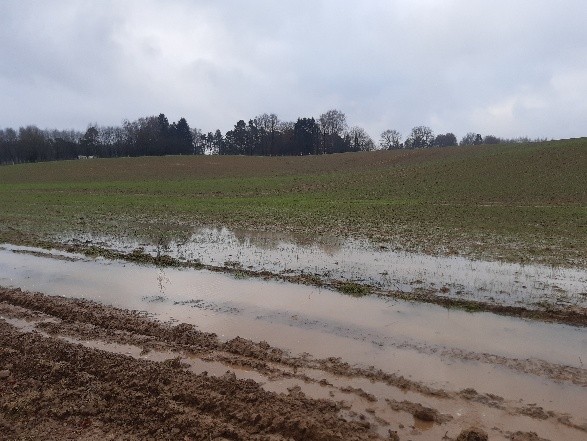
The farm used to face some severe soil erosion issues, turning a part of the land into deep gullies, preventing any crop to be grown in the area (see picture below). Indeed, the fine loam soil, with its low organic matter content, reacts easily to water scarcity and excess making the farm very dependent on the precipitation.
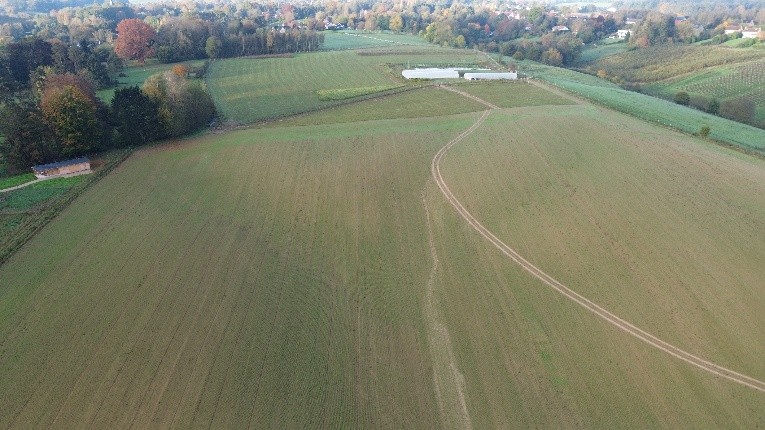
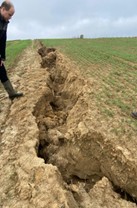
When the current farmer, Alexandre De Briey, bought the land and took over the farm in 2021, he wanted to improve the soils and saw agroecology as a solution for a more resilient farm. Since then, he has been turning the area into a complex system with organic vegetable gardening, fruit production and agroforestry.
AWAF, the Walloon AFaktive partner, supported him with the design and implementation of his agroforestry systems and additional water management measures. After a thorough analysis of the context of the farm and objectives of the farmer, they decided on mixed agroforestry systems including a grazed orchard, a vegetable garden intercropped with an orchard, and biodiversity hedges. To reinforce water infiltration and retention, erosion control hedges and mini-swales were installed. From September 2024 to February 2025, the whole system was implemented: a meadow was sown, 3 hedges and more than 200 fruit trees were planted.
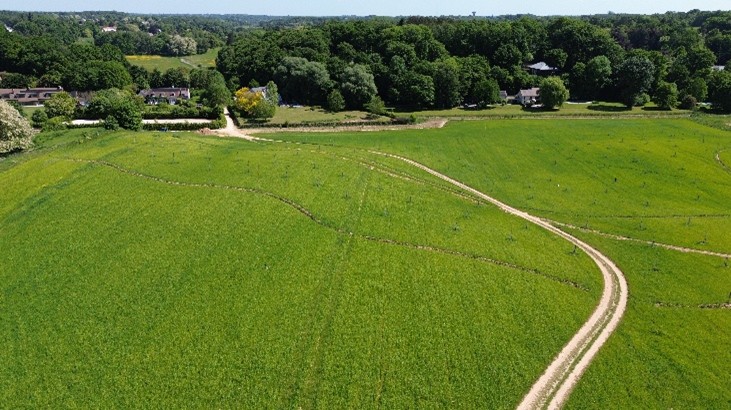
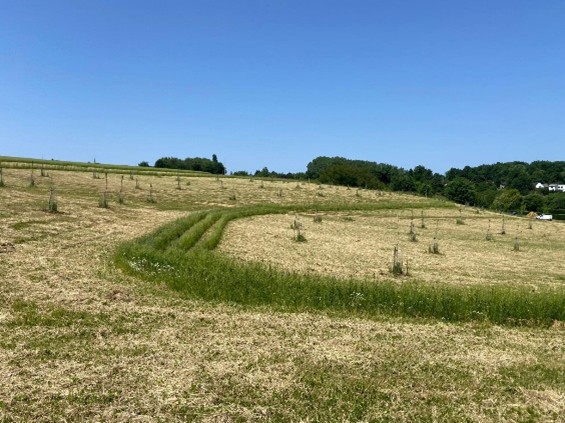
The monitoring activities in AFaktive provide valuable data and insights into the impact of agroforestry on soil and water at the farm. Currently, 7 soil humidity sensors, 1 rain gauge and an RBC-Flume are installed on the field, providing continuous water data. Additionally, some punctual measurements such as water infiltration, permeability and penetrability will be taken twice a year at the farm.
Hofgut Neumühle in Rhineland-Palatinate
The Hofgut Neumühle Teaching and Research Centre for Animal Husbandry is run by the Palatinate District Association. It provides an important part of the training for all agricultural apprentices in the state of Rhineland-Palatinate (Germany). In addition to proven agricultural practices, agricultural innovations are also an important part of research and teaching. For example, projects are carried out to reduce climate-relevant emissions from dairy farming and to create species-appropriate husbandry conditions. A new area of focus at Neumühle is the testing of agroforestry systems and their synergies for conventional agriculture. Since 2024, there has been an experiment with fodder hedges for small ruminants.
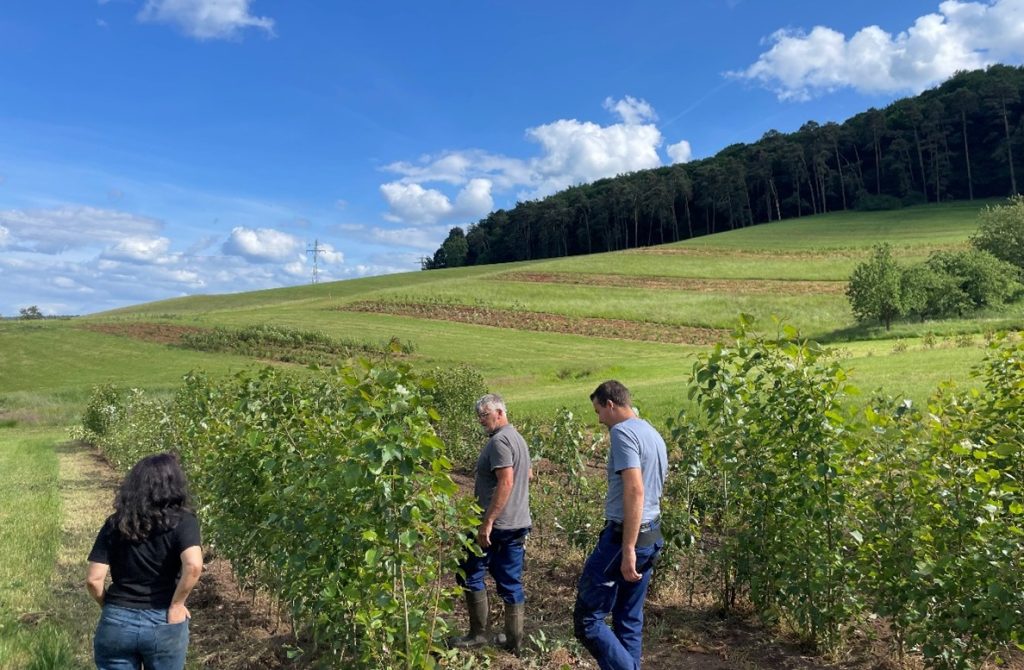
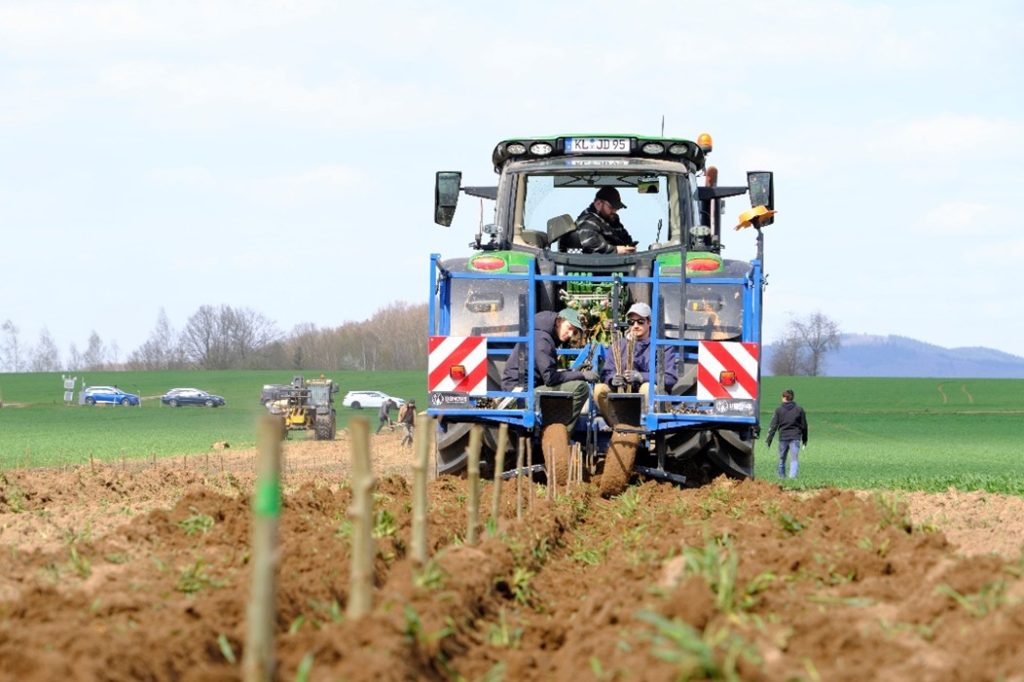
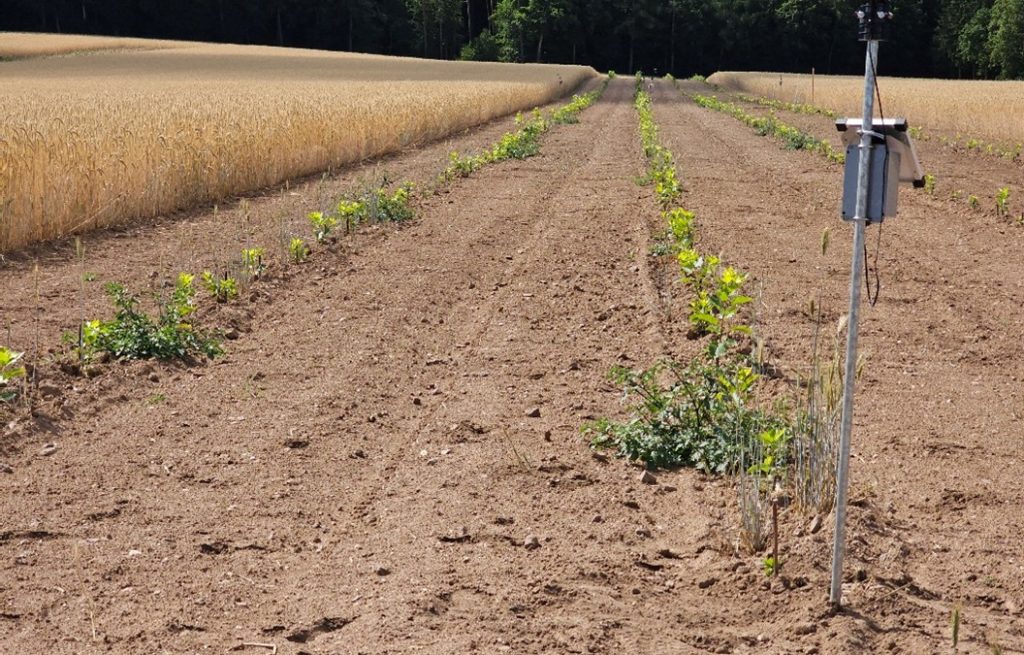
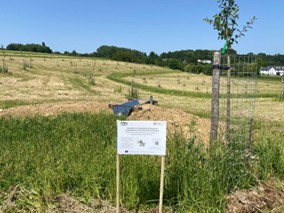
In spring 2025, alley cropping systems were established on three arable fields, which are intended to contribute to reduced wind speed, improved soil protection, water retention and yield stabilisation. These agroforestry systems consist mainly of poplars, which will be used in future to supply the farm with heat. One of the tree strips also contains various climate-adapted tree species for the production of valuable timber, which is intended for long-term material use. This new structure, which connects the adjacent forest edge with a patch of woodland in the agricultural landscape, is also intended to provide a special benefit for the biotope network.
The effects of these systems on the water balance (project AGROfloW) and biodiversity (AFaktive) are being investigated.