In early May 2026, 12 sixth-year agriculture students from VABI (an agricultural school in Roeselare), together with their crop production teacher, visited Inagro’s agroforestry plot. A field visit such this one, fits perfectly within their training. Discovering new cultivation techniques in real-life conditions remains an invaluable experience for students.
A Plot Full of Contrasts
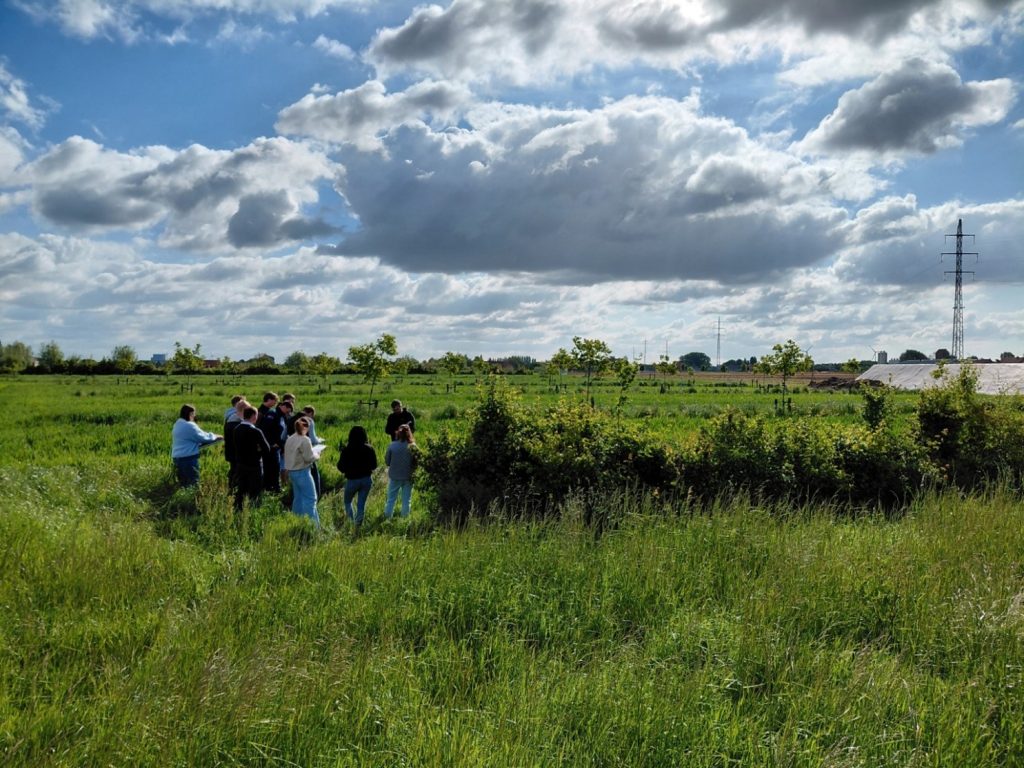
Upon arrival, the students immediately noticed the unique structure of the plot. Very different from the agricultural fields they are used to. Neatly aligned rows of trees in grass strips alternate with zones used for arable farming.
Researcher Willem Van Colen introduced agroforestry as a farming system in which trees and crops are combined. He emphasised that it is not only about production, but also about ecosystem services such as biodiversity, carbon storage, and water management.
Water as Both a Challenge and an Opportunity
The AFaktive agroforestry plot faced a specific challenge. Excessively high-water levels. Water flowed onto the field from surrounding areas and remained there for long periods.
Willem Van Coen explained: “Two of the five rows of walnut trees actually died due to prolonged waterlogging. That’s why we replanted walnut trees on raised banks about half a metre high.”
In addition to these raised banks, the tree rows and grass strips also play a key role in regulating water flows. Together, they form a well-designed system that responds to climate change and increasingly extreme weather conditions.
Biodiversity in Bloom
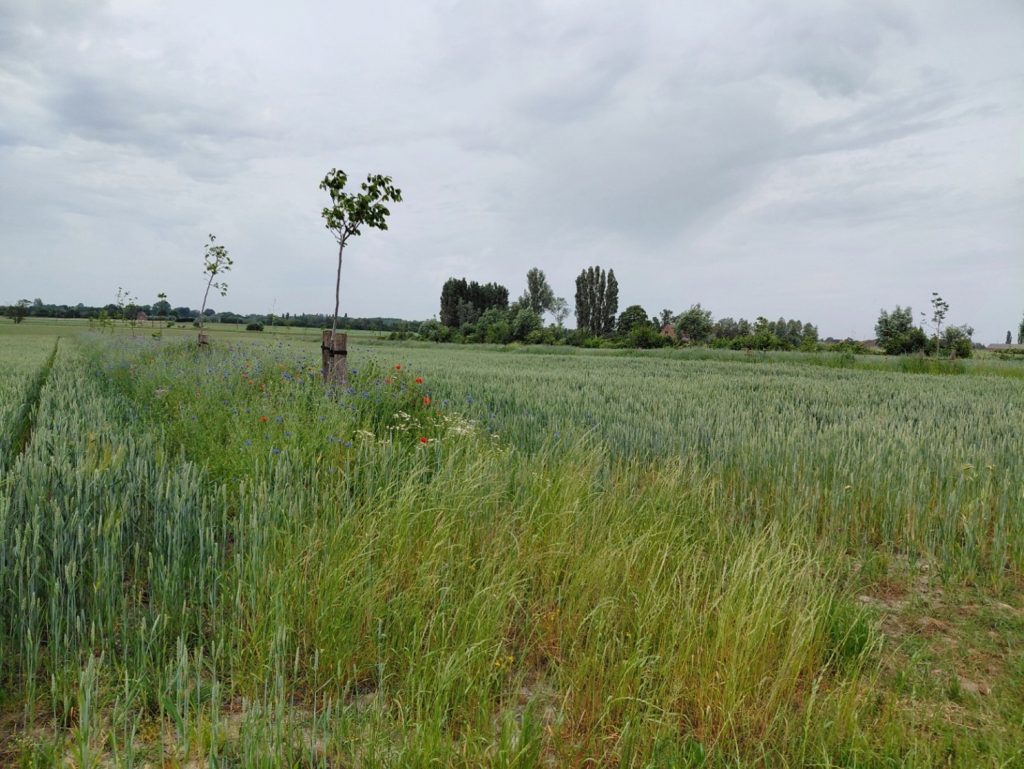
The students were clearly impressed by the species-rich grass strips. Poppies and cornflowers were in full bloom, creating a vibrant display of colour.
Willem explained: “These mixtures are not just beautiful—they also provide food and habitat for insects. In this way, we boost biodiversity on the plot.”
The importance of biodiversity came up repeatedly as an essential element of future-oriented farming systems. The hedges along two sides of the plot also sparked the students’ curiosity.
One student asked: “Why were these hedges planted here? Is it only for nature?” Willem Van Coen: “The hedges serve multiple functions. They act as windbreaks, enhance biodiversity, and help regulate the field’s water balance.”
Research in Action: Monitoring Insects
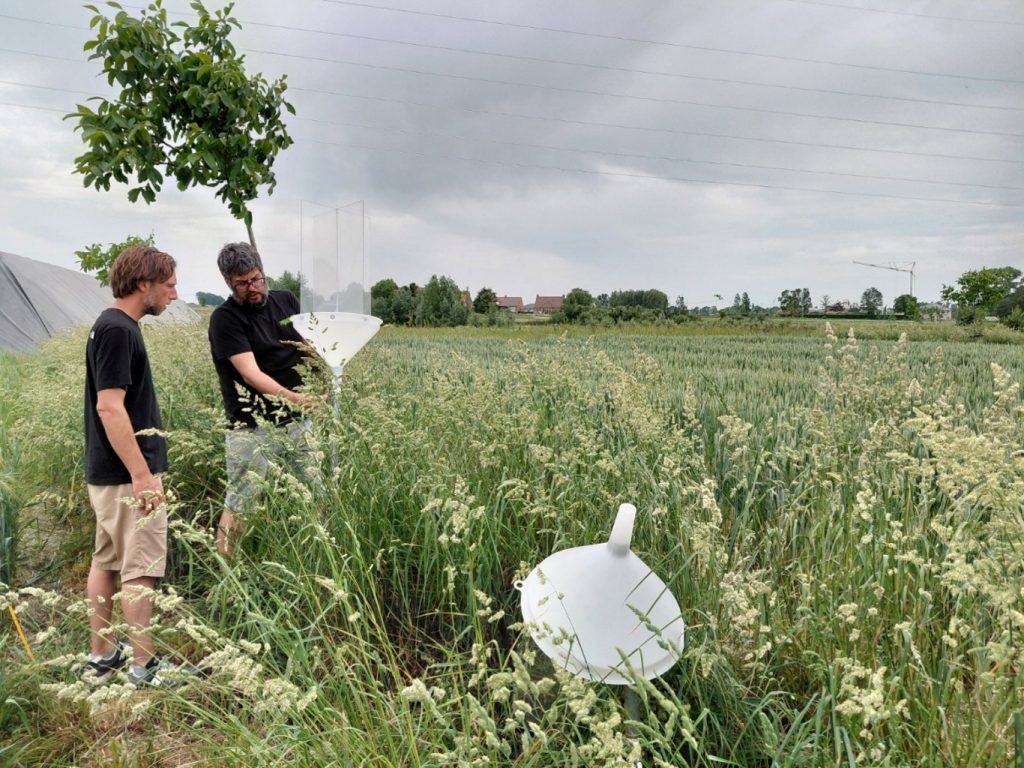
Another particularly interesting aspect for the students was the ongoing research. Willem Van Coen demonstrated how insects are monitored using window traps.
“We measure this, among other things, through insect catches,” Willem Van Coen explained. “By analysing these regularly, we can track changes in species and populations over time.”
Learning from Practice
The visit made it clear that agroforestry is much more than simply planting trees. It is a carefully designed system in which agricultural production, water management, climate adaptation, and nature go hand in hand. As their teacher nicely summarised: “For the students, this was a unique opportunity to see theory put into practice.”
Dieter Depraetere, Inagro