|
|
|
|
Dear agroforestry enthusiasts,
|
please find enclosed our latest edition of the AFaktive newsletter with information on the status and progress of the project and the announcement of our agroforestry video series. You are welcome to forward the newsletter to your contacts and interested parties. Let the AFaktive community grow! We look forward to hearing your feedback and exchanging with you.
|
|
“There is no problem on the planet that cannot be solved by adding more trees.”
|
AFaktive news
Foreword
|
No more than a small sapling in the last newsletter at the end of 2024, the AFaktive project has since then grown more stable roots and a larger trunk, just like the young trees planted at the AFaktive sites in Belgium. For all six agroforestry pilot sites, the necessary data has been collected for the Agroforestry and Water Management Plans. On pioneer sites, which have more mature agroforestry systems, the installation of different measuring devices has been carried out since December 2024. A very busy time for the AFaktive partners, which met regularly – online and offline – such as at the farmers day in Voeren (Belgium) on 13th February. Now that the basic set-up is in place, the project partners are curious to see which insights on water management the monitoring system will provide. Enjoy the reading!
|
|
|
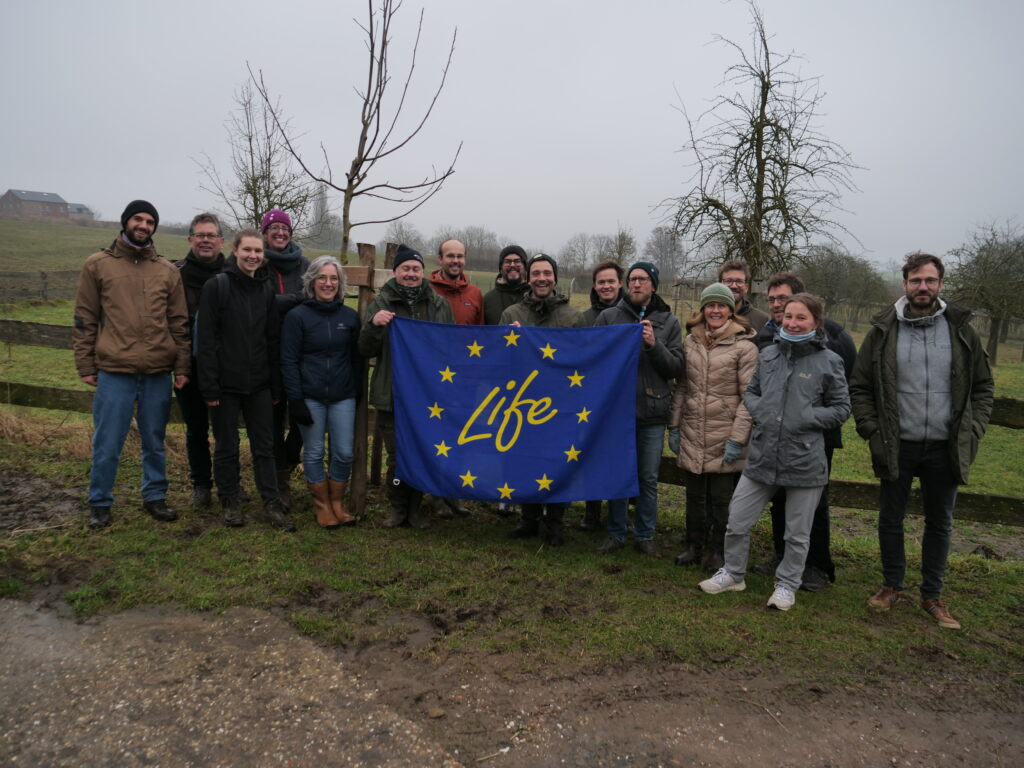
Farmers Day in Voeren (Belgium) on 13th February 2025 (© Photo: IfaS)
|
Our pilot sites
|
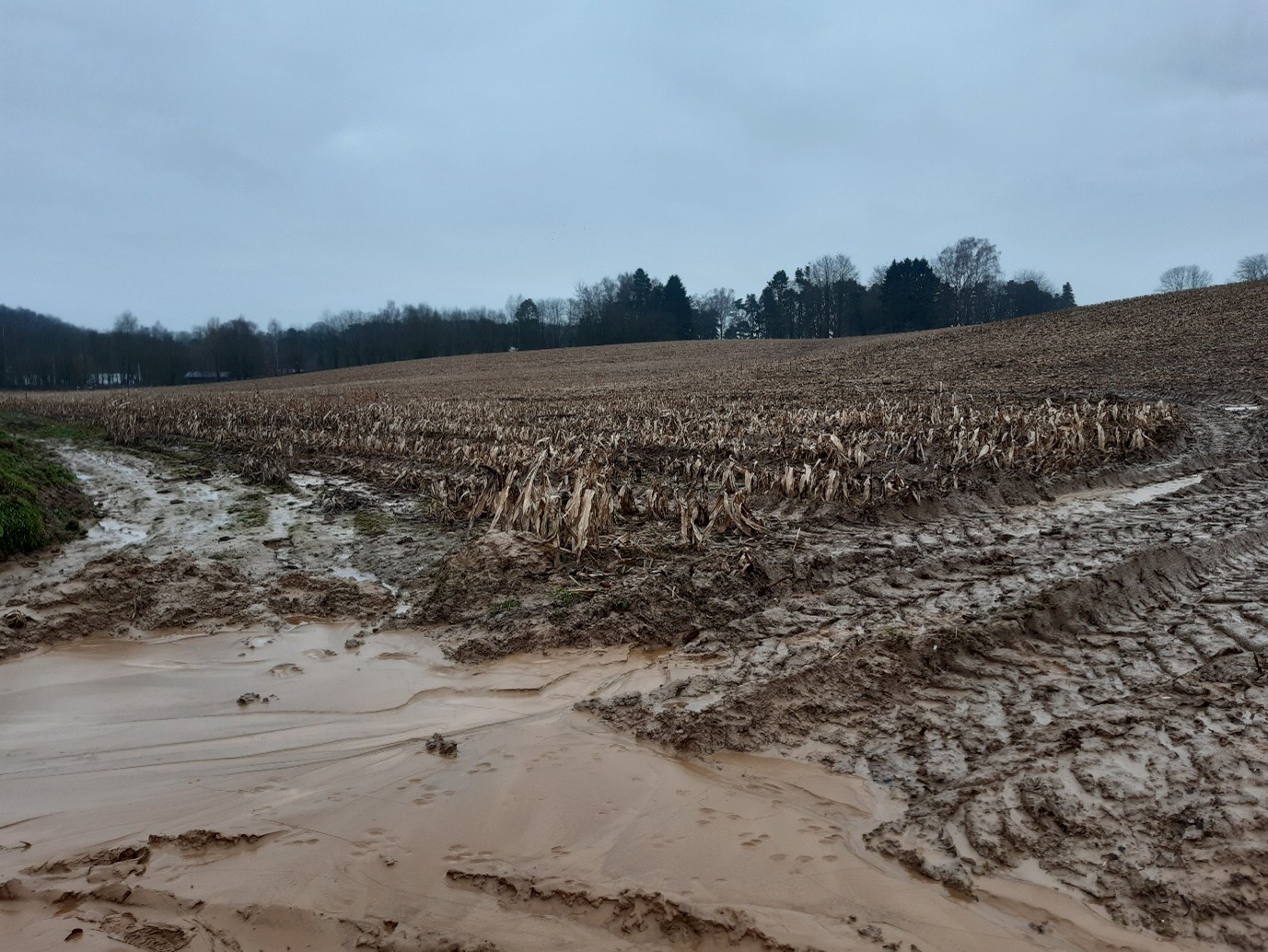
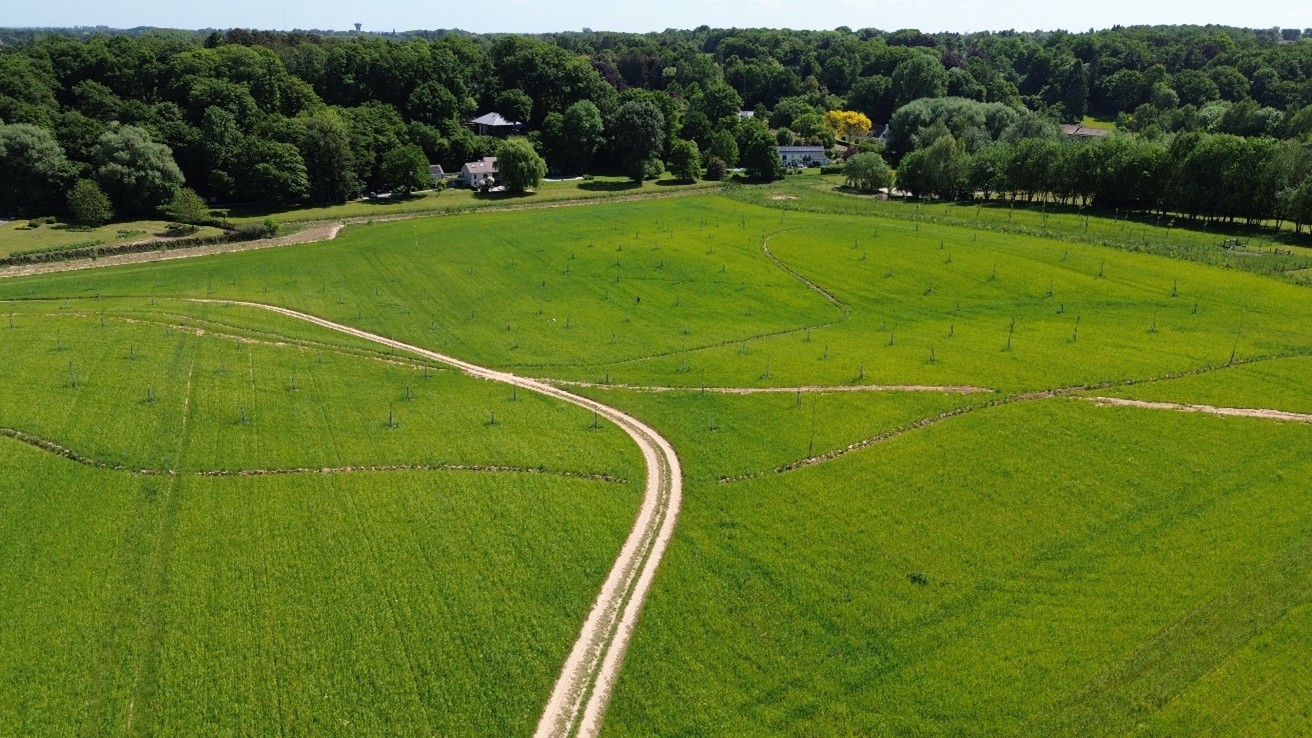
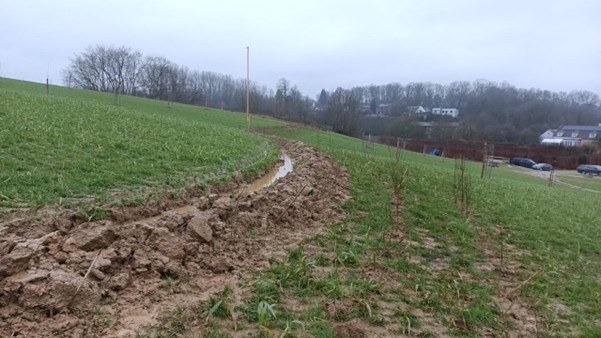
Pilot sites are farms on which new agroforestry systems are being installed within AFaktive. The project is coordinating two pilot sites per project country (Belgium, Germany and Netherlands) for a total of six pilot sites. The intensive exchange with the farms served the purpose of designing an agroforestry and Water Management Plan (AWM Plan) for each of them. Although the AWM plans are not finalised yet, one of our pilot sites supported by the Association for Agroforestry in Wallonia and Brussel (AWAF) – La Ferme des Marnières, Ohain (Belgium) – already planted in the season 2024-2025 (November-February). This former crop field, suffering from erosion and mudflow (s. photo below), has been transformed into a diversified system, combining an orchard with a vegetable garden intercropped among fruit trees (s. photo below).
|
|
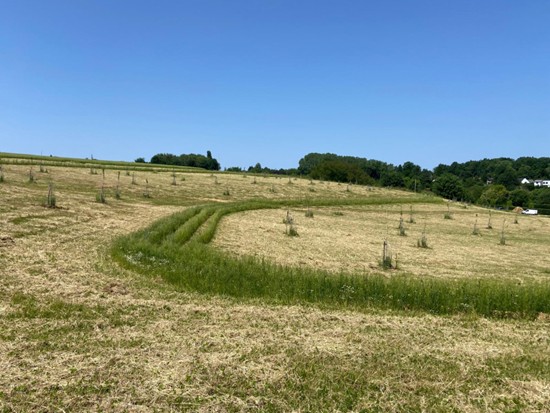
The meadow was sown in September last year, followed by the planting of over 200 fruit trees in November, and the establishment of three erosion control hedges — including two mini-swales — in February 2025. This more structured landscape is expected to enhance water management on the plot, while increasing biodiversity and improving resilience against future extreme climate events.
|
|
|
|
|
|
|
La Ferme des Marnières pilot site, Wallonia, Belgium. Mudflow in 2021. (© Photo: Alexandre de Briey)
|
|
|
La Ferme des Marnières pilot site, Wallonia, Belgium. Orchard, meadow, hedges and mini swales in May 2025. (© Photo: AWAF)
|
|
|
|
|
La Ferme des Marnières pilot site, Wallonia, Belgium. Triple row erosion control hedge in June 2025. (© Photo: AWAF)
|
|
|
|
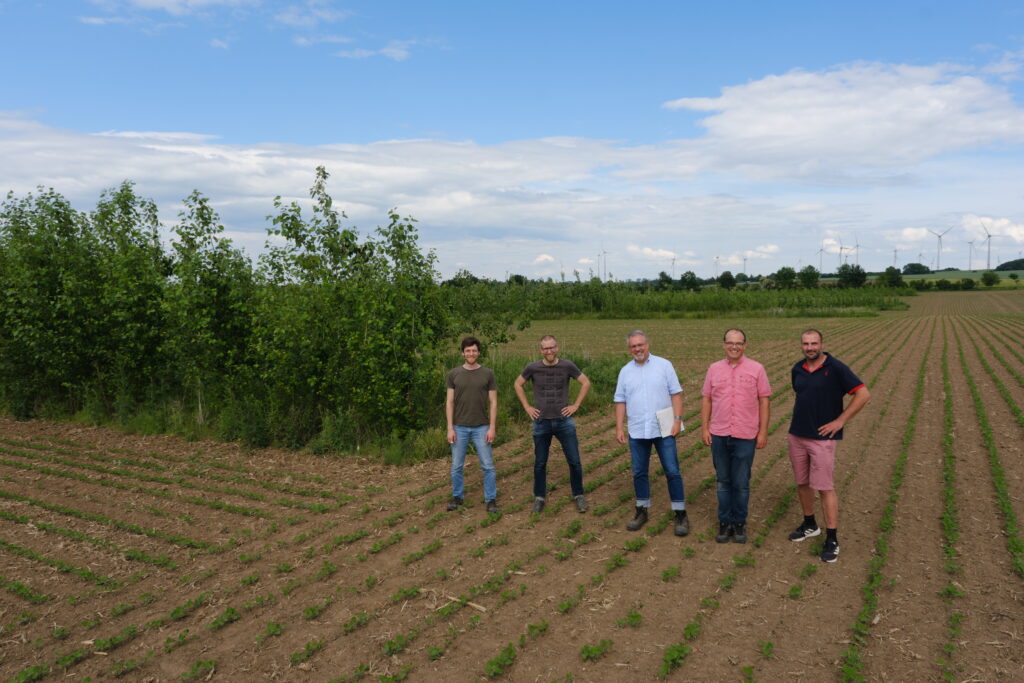
Beyond the pilot sites, so called “expansion sites” are being identified. In fact, the project team is already “recruiting” further farms that are interested in implementing an agroforestry system. These farms shall also serve as incubators for the regional upscaling of agroforestry as a tool in water management. Thus, if you know suitable farms and/or regions that aim to implement such nature-based solutions in water management, do not hesitate to contact us!
|
|
|
Uherek pioneer site in Saxony-Anhalt, Germany (© Photo: IfaS)
|
Monitoring of the AFaktive agroforestry systems - hydrology
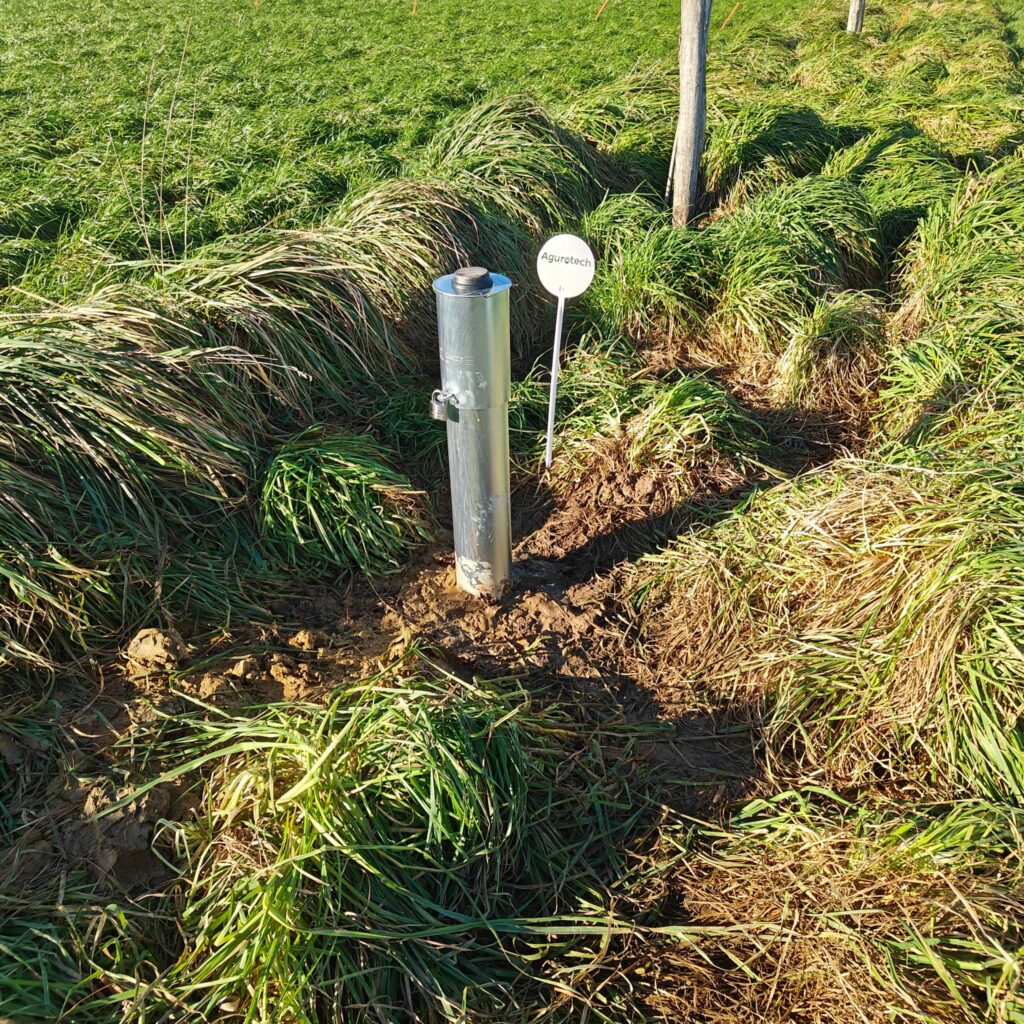
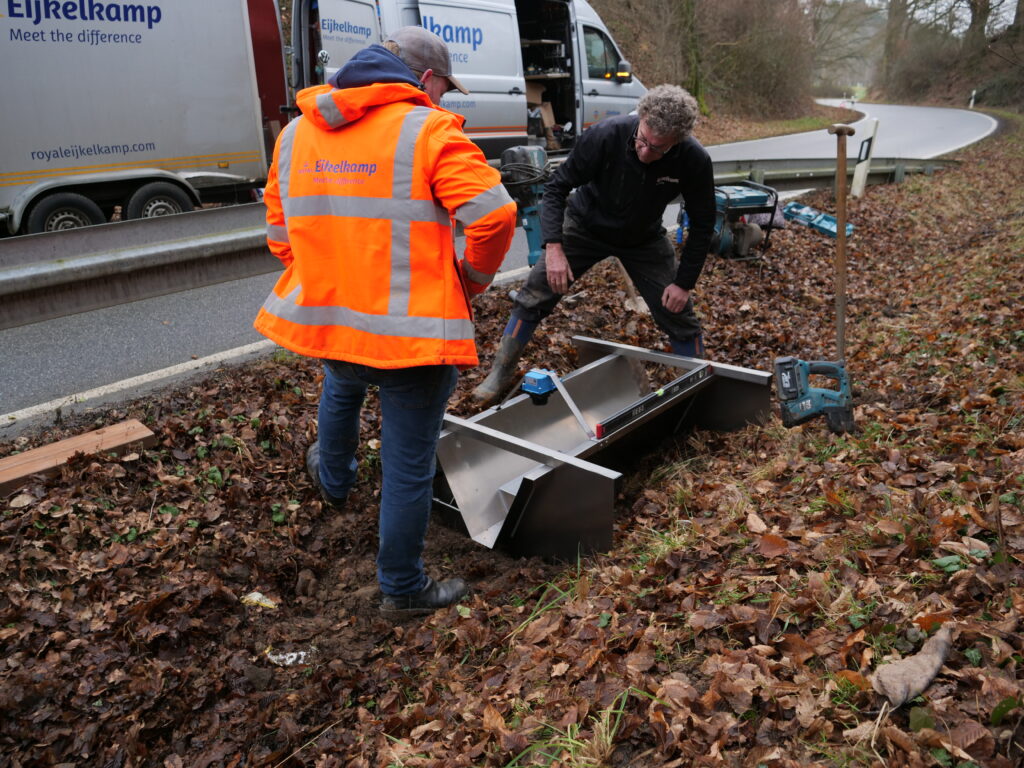
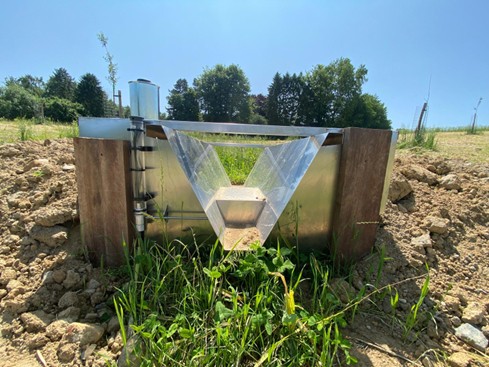
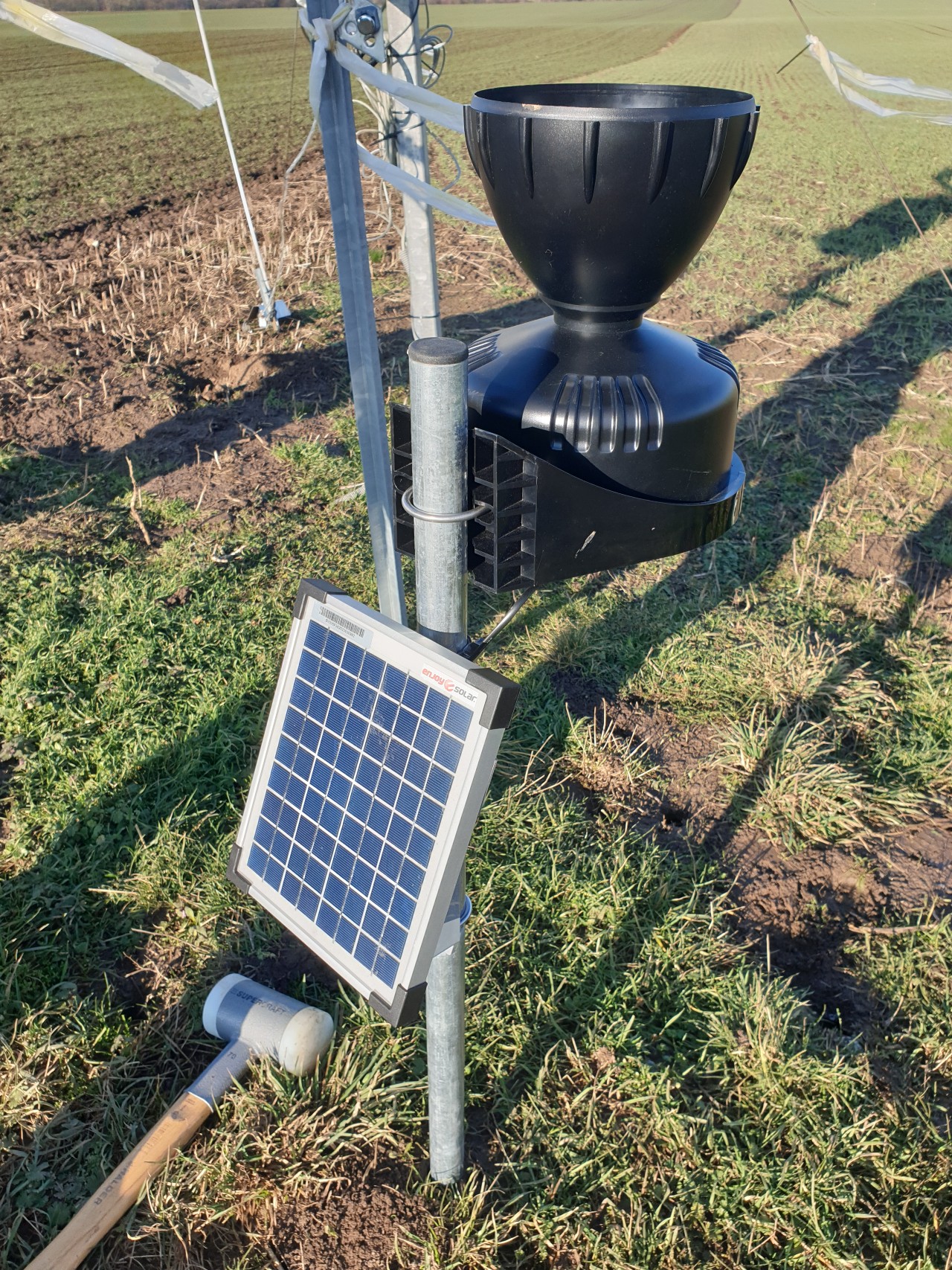
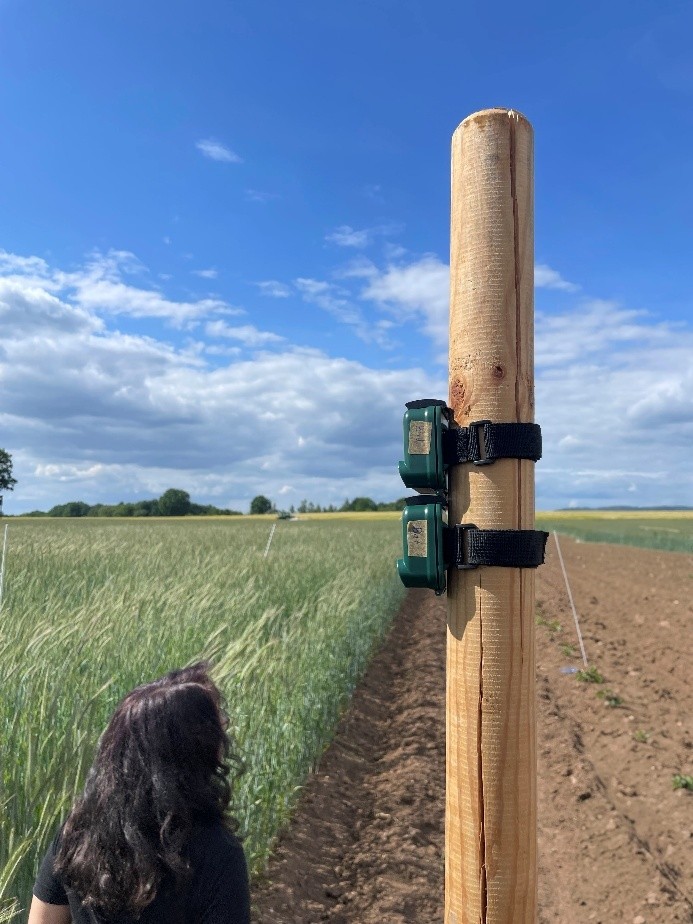
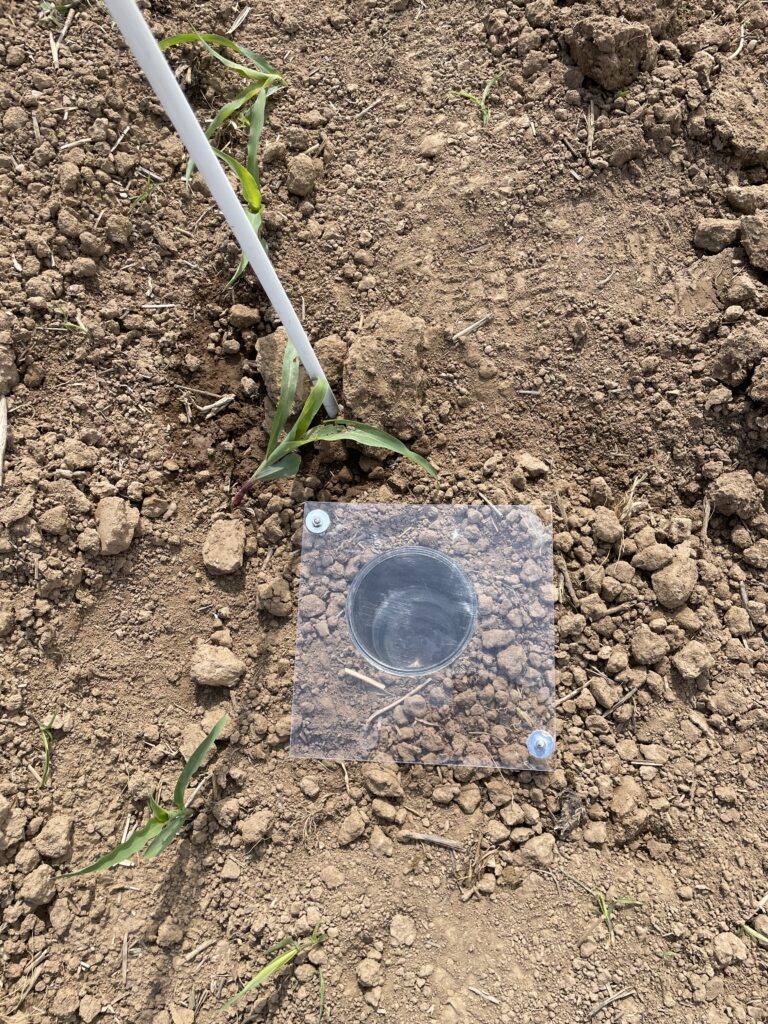
The set-up and coordination of the AFaktive monitoring system has been one of the largest tasks of the project team so far. For this, the so-called “pioneer sites” offer very interesting insights, since they have more mature agroforestry systems (at least three years) and therefore older and larger trees. Since December 2024, five pioneer sites and one pilot site have been equipped with sensors. Furthermore, four more pilot sites are planned for the installation of sensors. As soon as the next pilot sites will be implemented, the installation of sensors will also take place there. Considering AFaktive´s focus on water management, the project measurements concentrate on hydrology. In the following, are some pictures of the installed devices. The collected data will serve to further develop models to assess and quantify the effects of the agroforestry systems on run-off, erosion, water balance and yield.
|
|
|
|
|
|
|
The above devices are soil humidity sensors, respectively in a transect and individual.
|
|
|
|
|
|
|
The above device is a flume and has been set along the road next to the project site to measure runoff during precipitation events.
|
|
|
A larger version of the flume was installed on a run-off axis of the plot of the Ferme des Marnières in Ohain, Belgium.
|
|
|
|
|
The device on the left is a rain gauge used to measure precipitations on the agroforestry field.
|
|
|
|
Monitoring of the AFaktive agroforestry systems - biodiversity
Biodiversity is another focus of the monitoring in AFaktive. Also in this case, the activities have started. Different methods will be implemented to measure different species. As far as the insect population is concerned, pitfall traps are being installed. In the case of bats and birds, audiomoth devices have been installed, which record the voices and calls of these species. The recordings are then analysed by an AI software. Finally, with regard to soil life, the innovative “LIFE Monitor” analysis – patented at the HAL24K Agri company – will be employed.
|
|
|
|
|
|
|
Audiomoth (© Photo: IfaS)
|
|
|
Pitfall trap (© Photo: IfaS)
|
|
|
|
Training in manual measurements
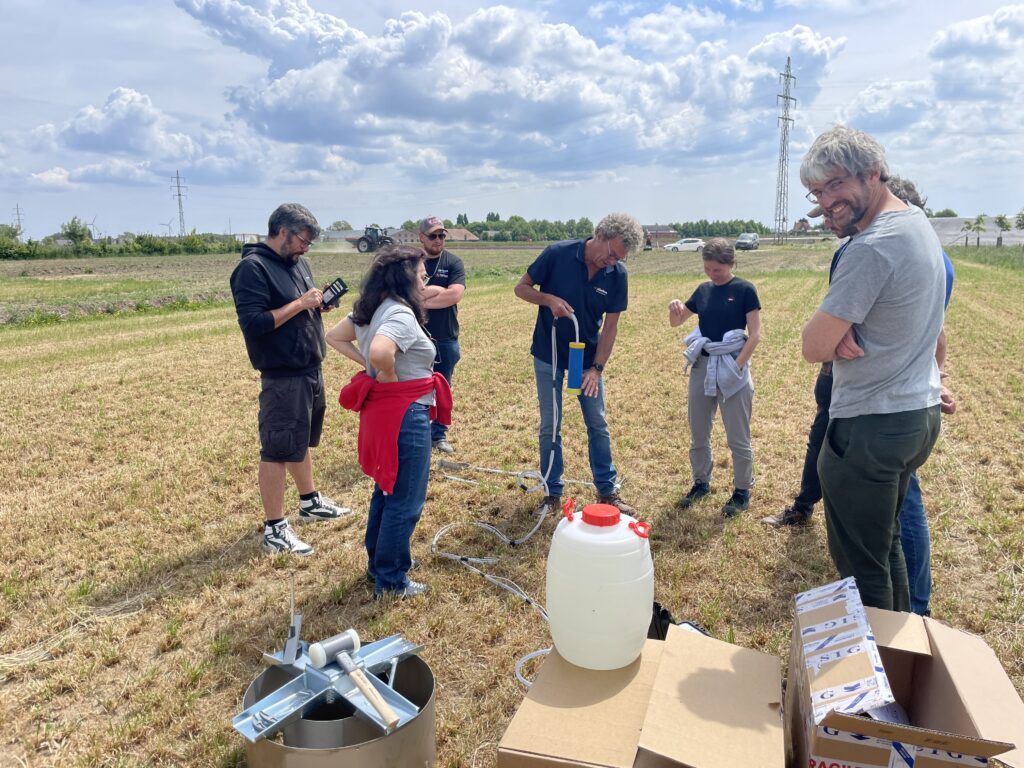
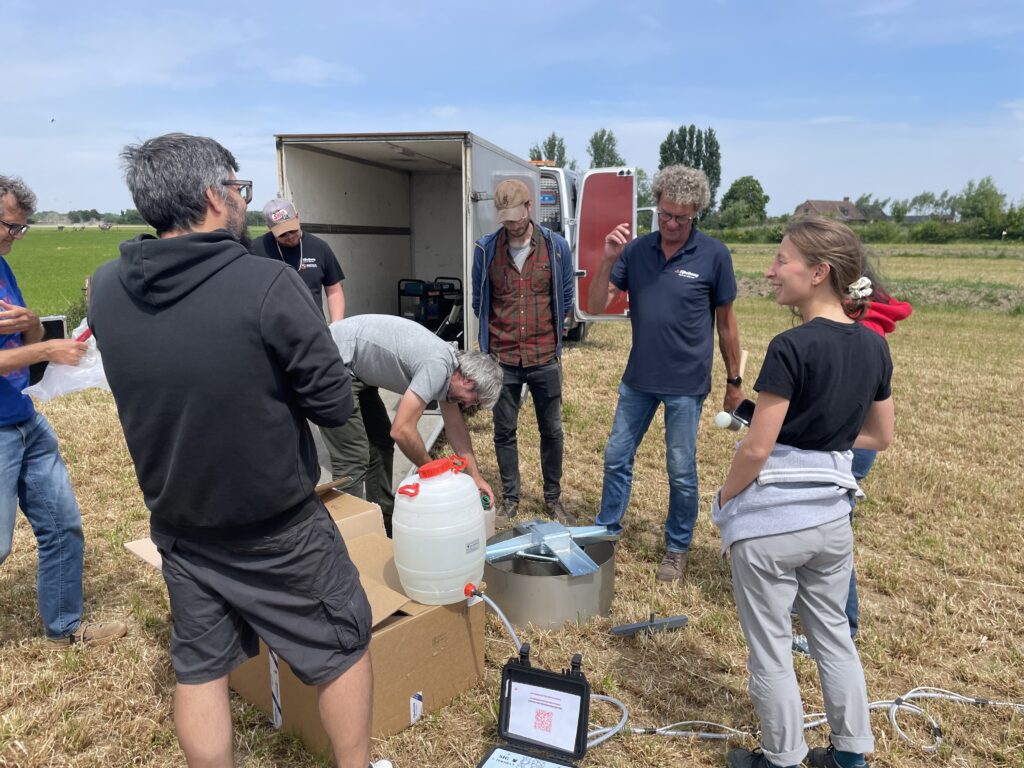
Not all hydrological measurements are recorded automatically by devices that send data to the cloud. Some measurements have to be carried out manually. To this end, two training sessions, one in Belgium and one in Germany, have been carried out by project partner Royal Eijkelkamp. In these sessions, the other partners learned, for instance, how to assess infiltration with a double-ring infiltrometer or how to measure compaction with a penetrologger.
|
|
|
|
|
|
Training being conducted in Belgium (© Photo: IfaS)
|
Agroforestry impact on water balance – the rainfall-runoff models
An important task of the AFaktive project is the representation of how water behaves in the fields during rainfall events. The resulting infiltration into the soil, overland flow and erosion are particularly relevant to the project. The core of the two-dimensional hydrodynamic numerical model used in AFaktive to simulate rainfall events existed prior to the project. However, the model currently does not satisfactorily integrate agroforestry. Add-ons and modules are being developed to include its effects on hydrological and hydraulic processes. Initial simple models have been built for the AFaktive project sites. These models represent the current state-of-the-art and do not yet incorporate research findings or innovations. They will be improved throughout the project using data and results from laboratory and field experiments, monitoring, UAV surveys and literature research.
|
These enhancements are under development by the project partners from the Water Research Group at the Institute for Technology Transfer (FITT) at Saarland University of Applied Sciences and the engineering consultancy Hydrotec. The latter holds the patent for the simulation software.
|
|
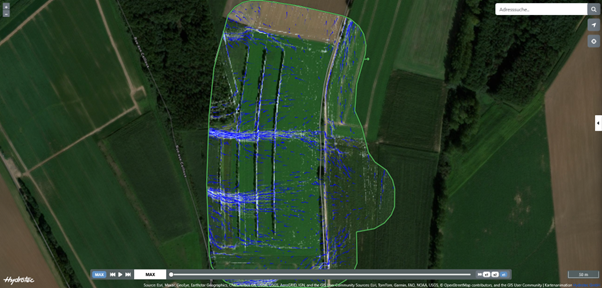
Displayed below are the results of a heavy rainfall simulation conducted with our model for the project site in Ittre, Belgium:
|
|
|
|
|
|
|
Visualisation of results from a heavy rainfall simulation with the Hydrotec software
|
Swales installed in Belgium
Trees and agroforestry systems are not the only methods to retain water and improve the water balance of a field. Agroforestry can be complemented by landscape methods such as keyline design and swales.
|
|
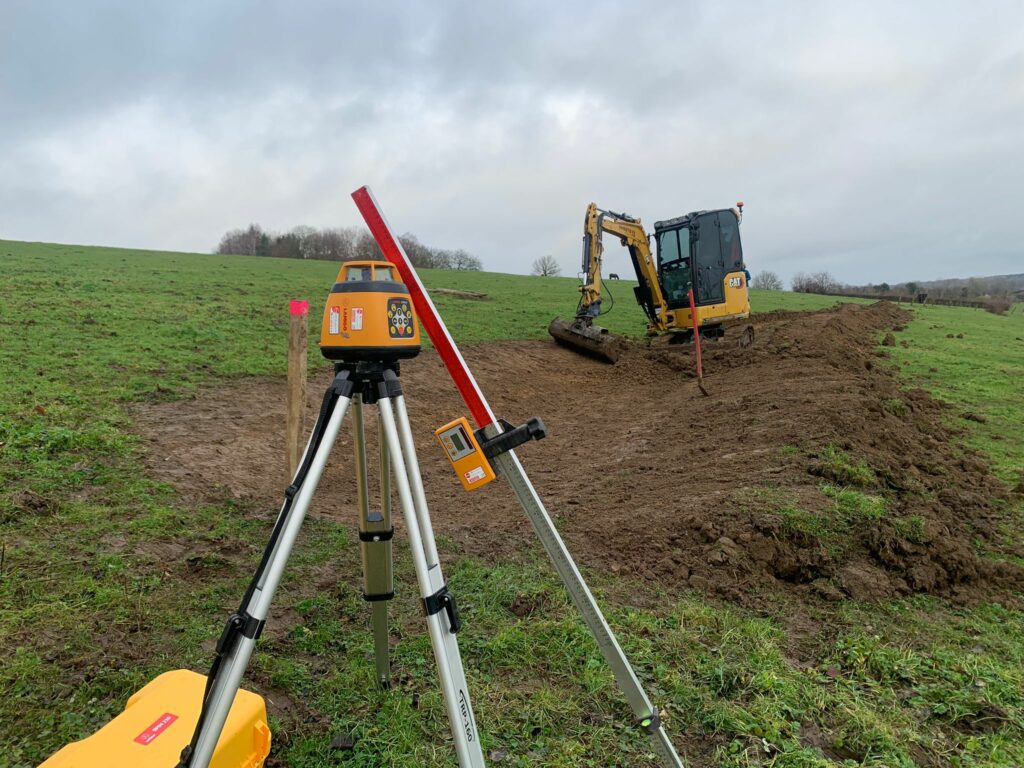
At the AFaktive pilot site of La Ferme des Marnières, some small swales were established. These were implemented on the contour lines upstream of two of the erosion control hedges. They have already proven effective in slowing down and infiltrating water (see picture below).
|
|
|
|
|
|
|
Mini swales filled with water after a heavy rainfall in La Ferme des Marnières, Ohain, Belgium © AWAF
|
|
|
Also at the AFaktive site in Voeren, Belgium, swales were implemented.
|
|
© Instituut voor Landbouw, Visserij- en Voedingsonderzoek (ILVO)
|
|
|
|
Digging Deeper: (ground)work to do!
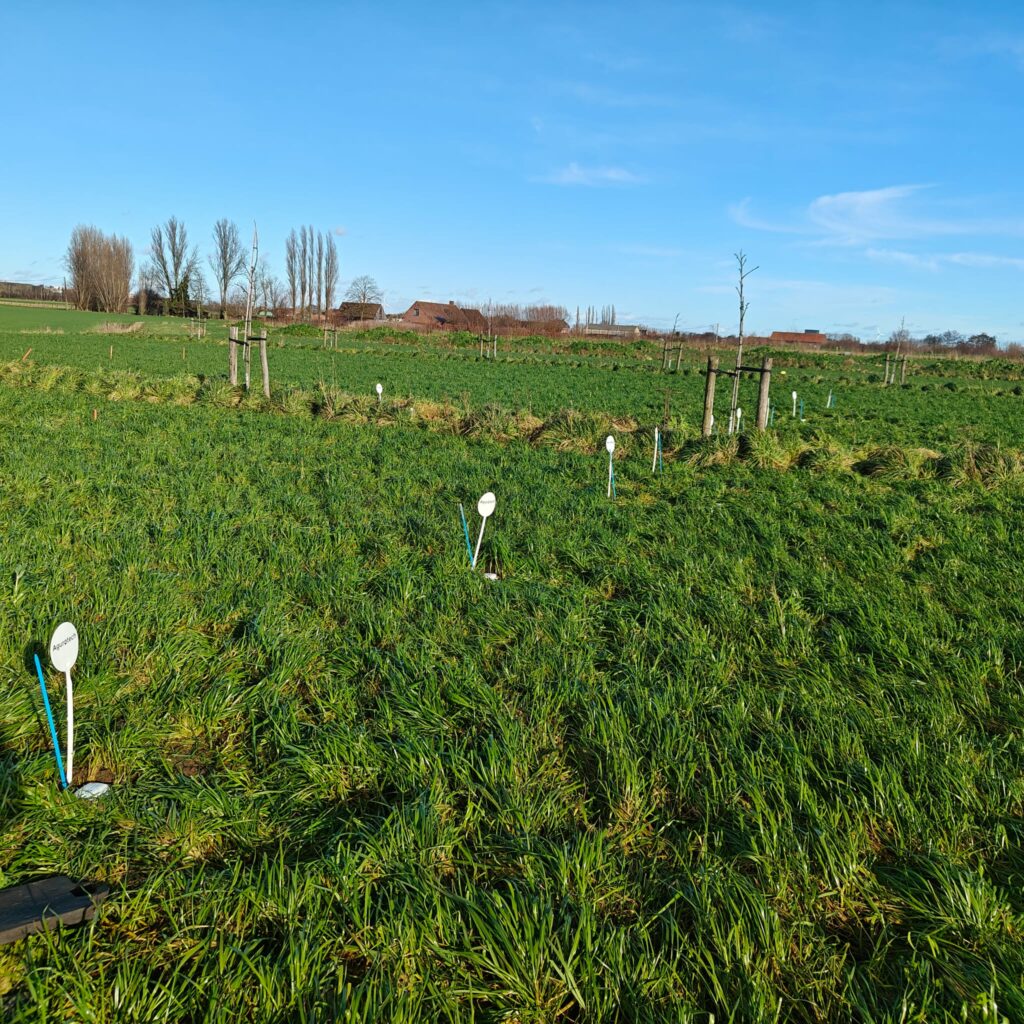
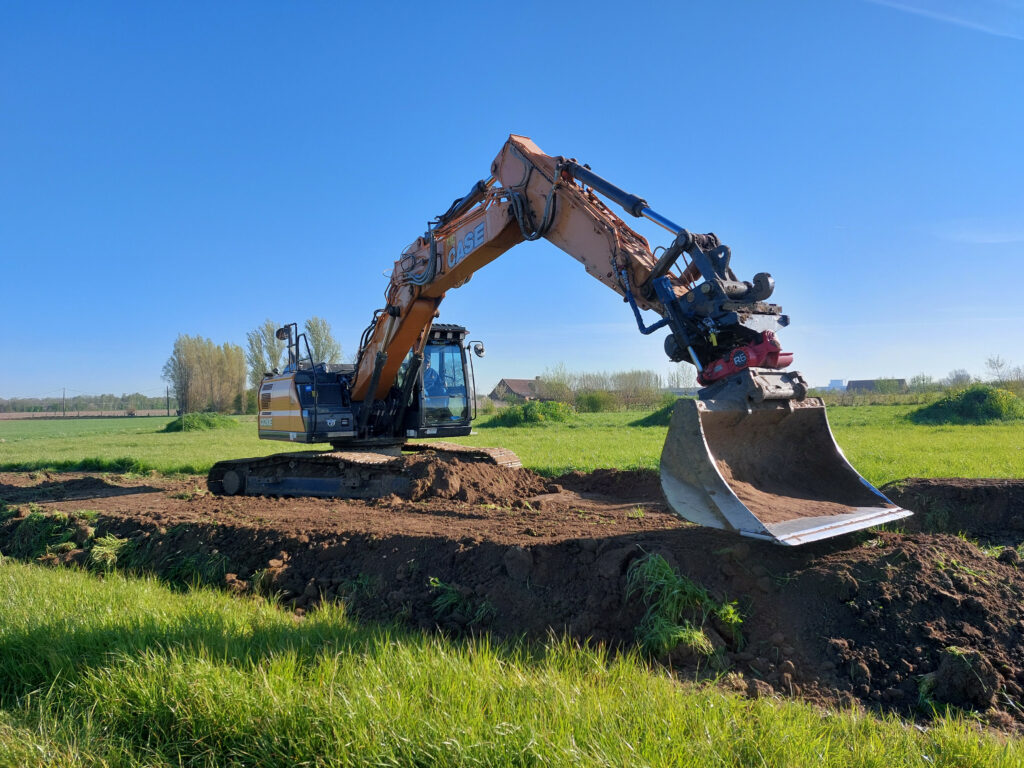
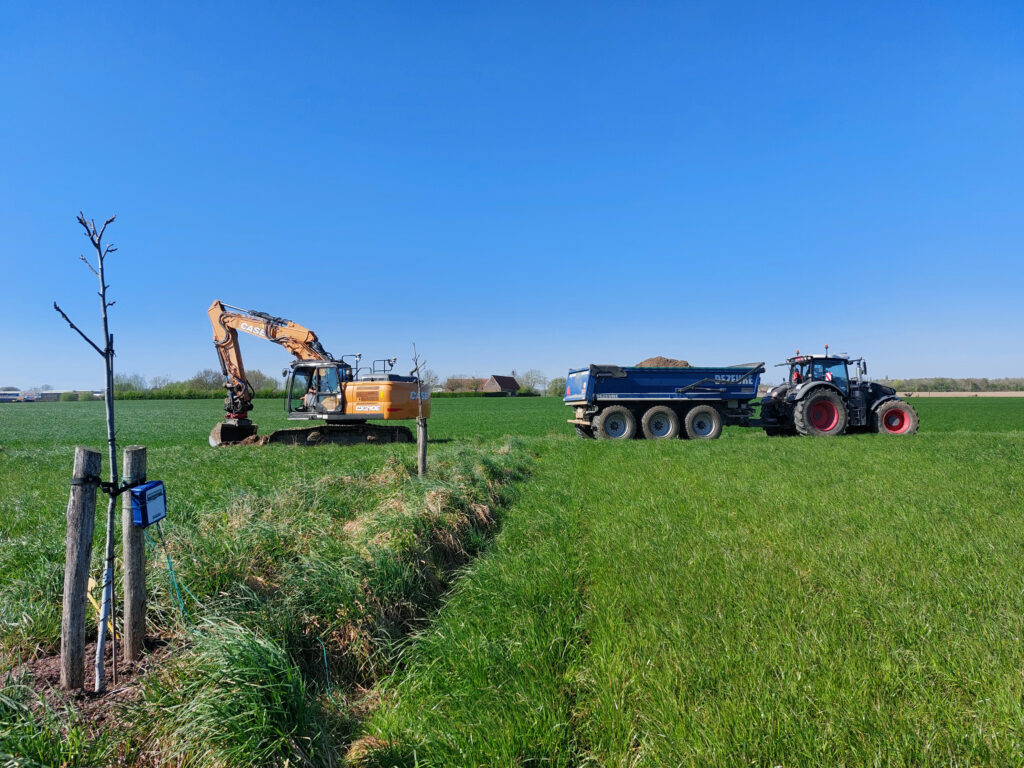
This spring, the groundworks on the agroforestry plot of the AFaktive partner Inagro were started. The past wet winters caused water problems and tree loss among the walnut trees. Therefore, Inagro implemented corrective measures. First, they tackled drainage issues by renewing the grass buffer strip along the creek. Furthermore, two beetle banks were constructed. These raised strips offer a raised and well-drained foundation for two new rows of walnut trees to be planted this winter and benefit insect biodiversity. Inagro also performed deep tillage to enhance root development and water infiltration. Finally, they installed two water level loggers to monitor the water on the plot. These will give insight into the influence of water on the trees.
|
|
|
|
|
|
|
Excavation of winter bed at experimental agroforestry plot © Inagro
|
|
|
Construction of beetle bank at experimental agroforestry plot © Inagro
|
|
|
|
AFaktive on television and in the press
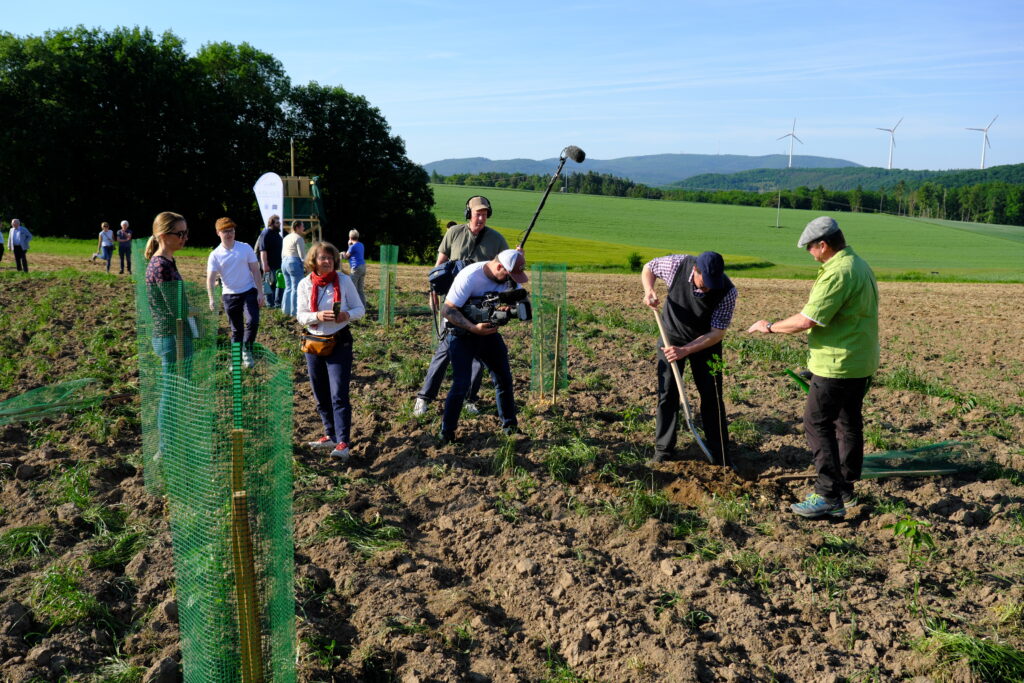
There is no question about the fact that there is more and more interest in the topic of agroforestry, especially as it offers a good approach against climate change in agriculture. The coordinator team was interviewed at the farm site Hofgut Neumühle educational and experimental centre for livestock farming by the German broadcasting channel SWR. A similar report was shown some days later in the German wide news format “Tagesschau”.
|
|
|
|
|
|
SWR filming a planting at farm site Neumühle (© Photo: IfaS)
|
Also the German newspaper Rhein-Zeitung was interested in AFaktive and published an article on the project and the potentials of agroforestry. More information here.
|
New channels: LUCA is online
The AFaktive project has now new social media channels. Beyond the existing AFaktive LinkedIn page, accounts have been created on Instagram, Bluesky and YouTube. These latest channels have been set up with the idea of bundling different projects in the field of nature-based solutions with a focus on agroforestry. The name is Land Use development for Climate Adaptation, shortly LUCA. Follow us to get regular updates on the project!
|
Video series AFaktive
|
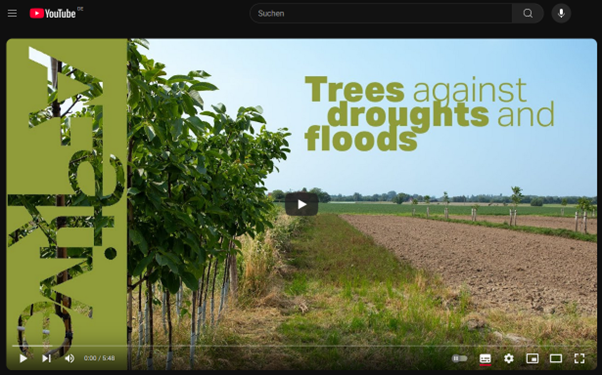
We are pleased to announce that the AFaktive video series has been launched. The first video “Rethinking Agriculture in a Changing Climate” is now available on YouTube. Subscribe our YouTube channel so you will not miss out on the next videos!
|
|
|
|
|
|
Networking
Since the start of the AFaktive project, it has become apparent that an increasing number of working groups are investigating the hydrological effects of agroforestry systems. A professional exchange on this topic offers clear benefits to all those involved, and, in the end, more can be achieved in practice. Both the evaluation and the development of planning tools can profit from this. In line with this idea, the AFaktive coordinator IfaS has set up an ‘Agroforestry and Hydrology’ working group in recent months, currently operating at German level. The working group currently brings together four universities, a consultancy firm and a state institute. The group discusses modelling approaches, harmonises experimental designs and exchanges practical experience and data. After four online meetings, a face-to-face meeting and a workshop will be held at the German Agroforestry Systems Forum in September 2025. At the same time, this network will be further expanded EU wide and internationally. A second workshop is planned at the European Agroforestry conference in Switzerland in 2026. As a result, the collaboration should result in a win-win situation for all parties involved.
|
News from the network
MODEMA – Analysis of processes in agroforestry systems
|
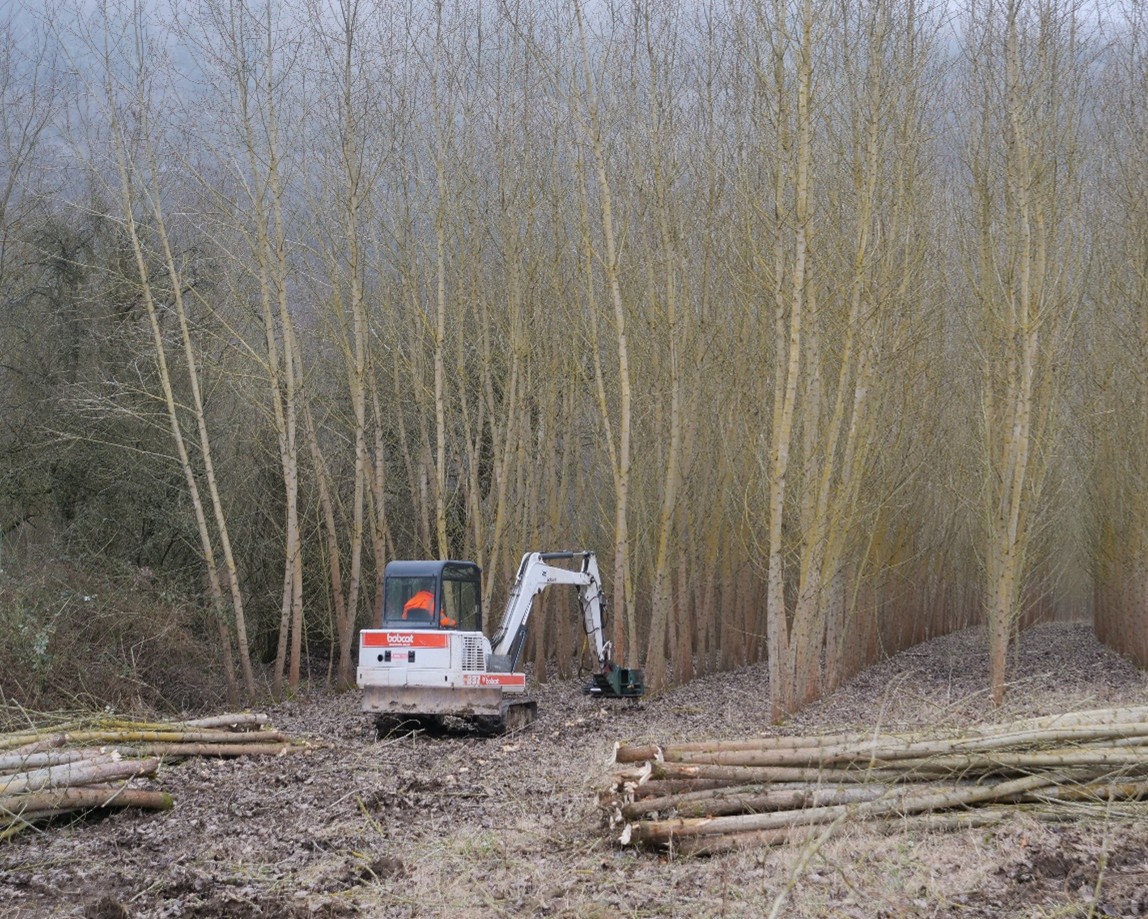
On the 20th of February 2025, the IfaS team analysed the harvest of an agroforestry system in Rhineland-Palatinate. At the Ingweiler Hof in the district of Kusel, a total of 1.4 ha of poplar trees aged twelve years were harvested. The IfaS team documented and filmed the process from the ground and from the air using an UAV (unmanned aerial vehicle) and later analysed the footage for time studies, i.e. measuring how long it takes for specific tasks or steps to be completed. The objective of these time studies is to generate data on different aspects of the management of agroforestry systems, ranging from planting, over maintenance, to harvest. The ultimate goal is to help agroforestry pioneers estimate and optimise the needed material, work time and costs of the production process.
|
|
|
|
|
|
Harvest at the Ingeiler Hof © IfaS (MODEMA)
|
Upcoming events
|
3rd-7th November: 16th International Circular Economy Week 2025 at the Environmental Campus Birkenfeld: https://icew.de/
|
|
|
|
|
|
|
|
|
|
|
The AFaktive project is funded by the European Commission's LIFE Climate programme under the grant agreement LIFE22-CCA-DE-LIFE-AFaktive. Views and opinions expressed are however those of the author(s) only and do not necessarily reflect those of the European Union or CINEA. Neither the European Union nor the granting authority can be held responsible for them.
|
|
|
|
|
|
|
|
|
|
|
|
|