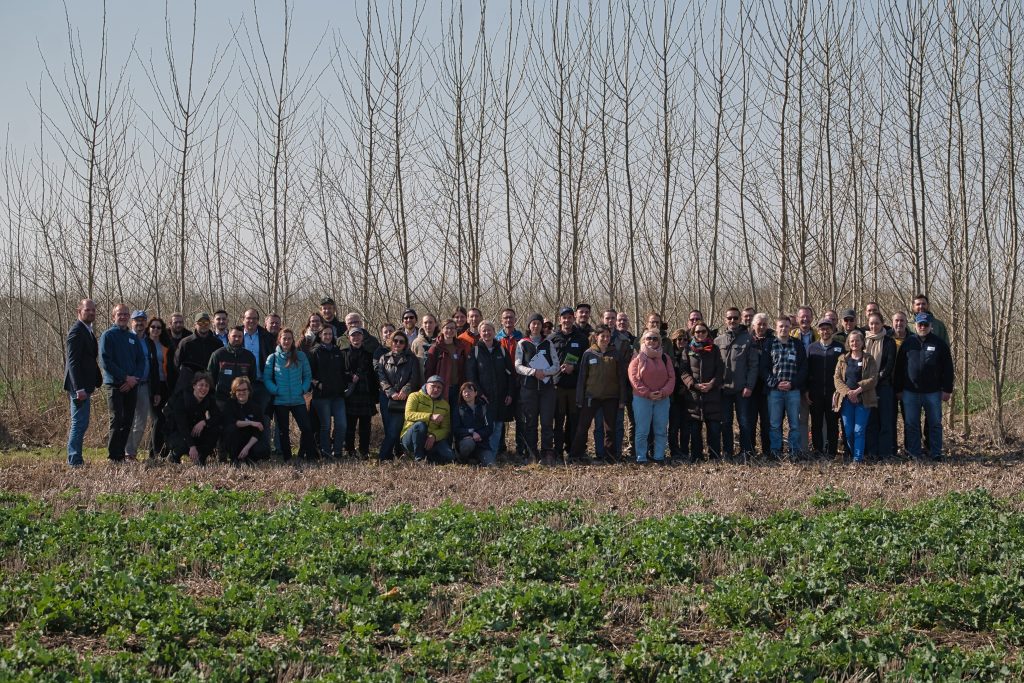
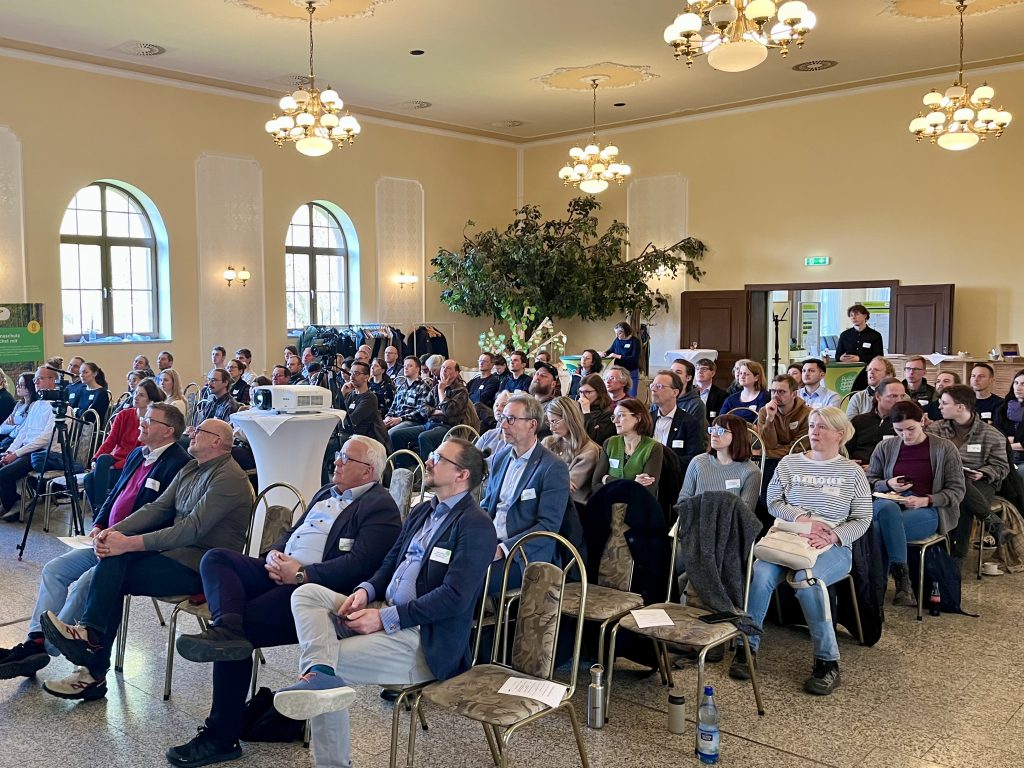
The Geoecology Working Group at Martin Luther University Halle-Wittenberg, the German Association for Landscape Management (DVL) and the Institute for Applied Material Flow Management (IfaS) organised a workshop and field day on 18 March 2026 to explore the potential of agroforestry for the South Saxony-Anhalt region. With presentations from the DiP SMART Agroforestry, DiP FaiReSyst, LIFE AFaktive, AGROfloW and MODEMA projects, the event focused on climate-resilient landscape design using agroforestry, agronomic topics and the question of which utilisation options for wood from agroforestry are promising. The day was rounded off with a visit to an existing agroforestry system on a plot in the municipality of Plotha belonging to the field partner ‘Uherek Agrarservice GmbH’. Around one hundred stakeholders from the fields of agriculture, politics and administration, research and development, as well as industry and commerce, took part in the event.
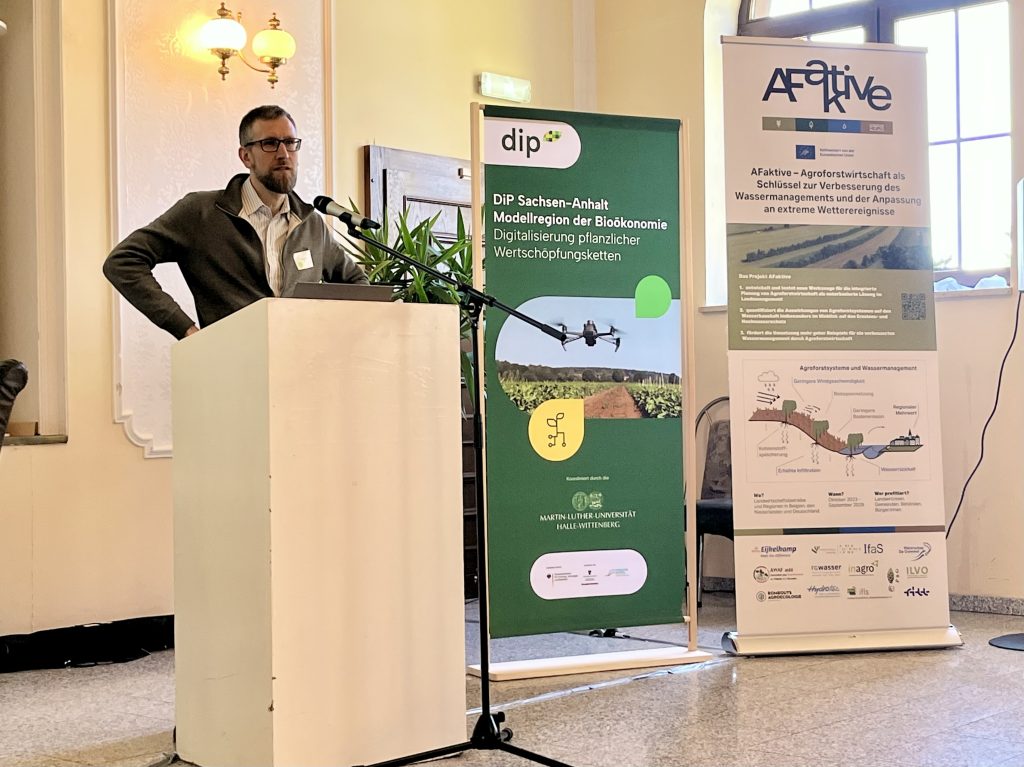
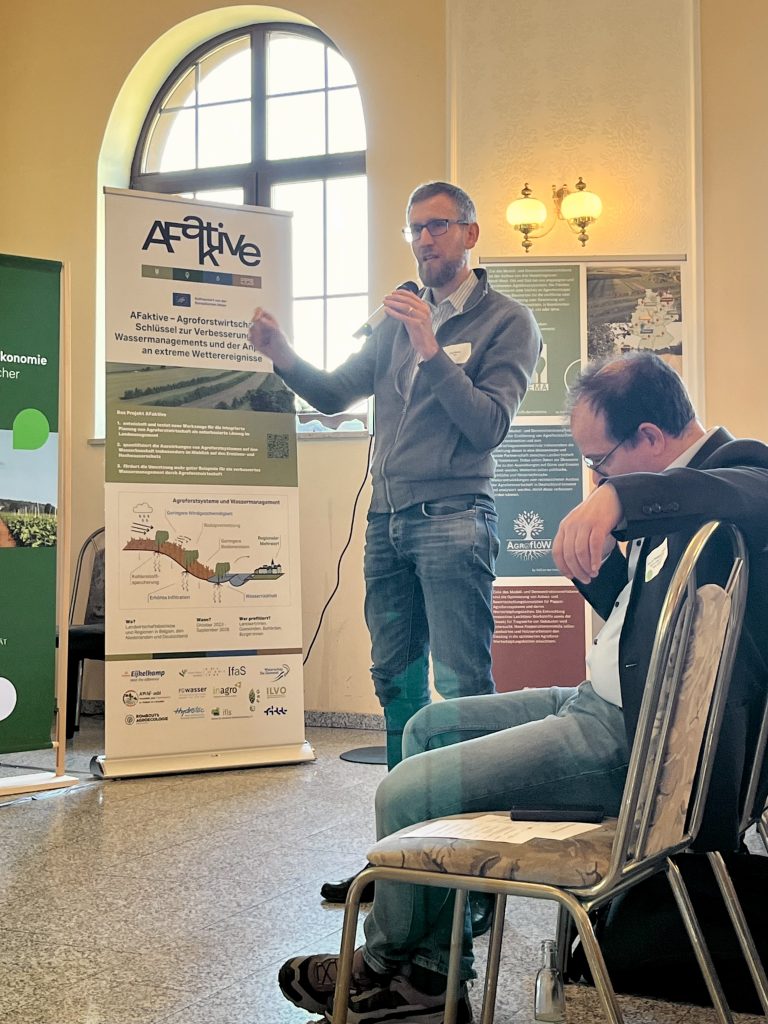
Following a welcome address by Jan Lukas Wenzel, scientific coordinator of the DiP SMART Agroforestry project, a series of keynote presentations from the participating projects provided information on ongoing research, such as water management through agroforestry, ecological benefits and implementation challenges, harvesting techniques and economic viability, as well as practical experience with energy use.
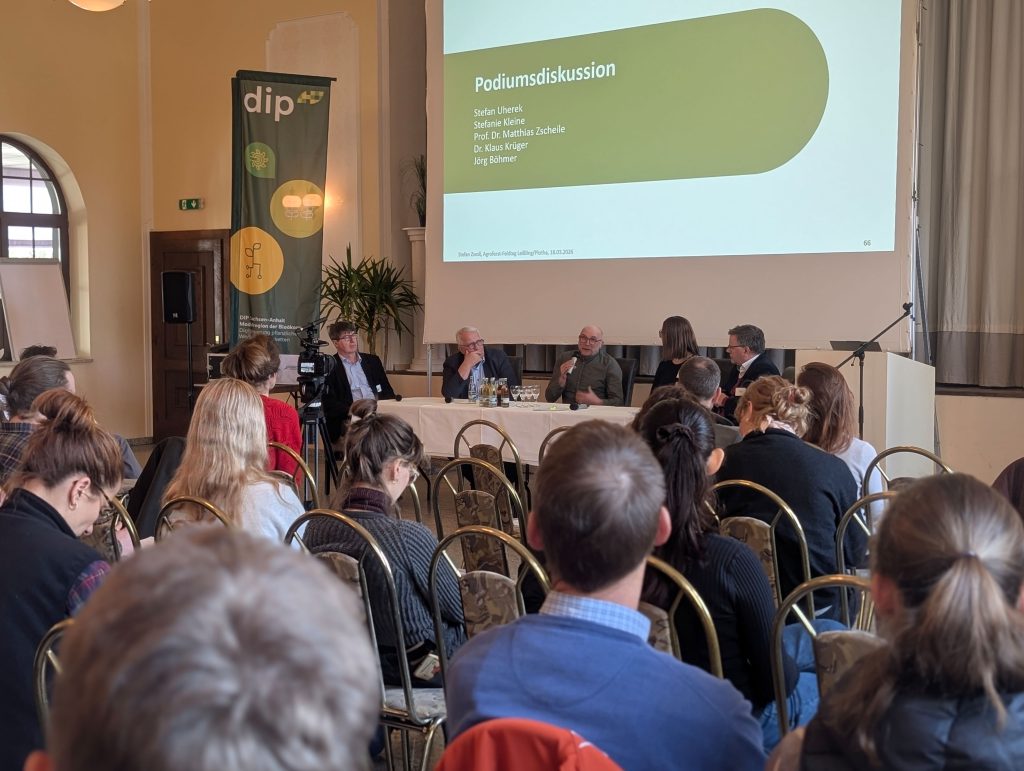
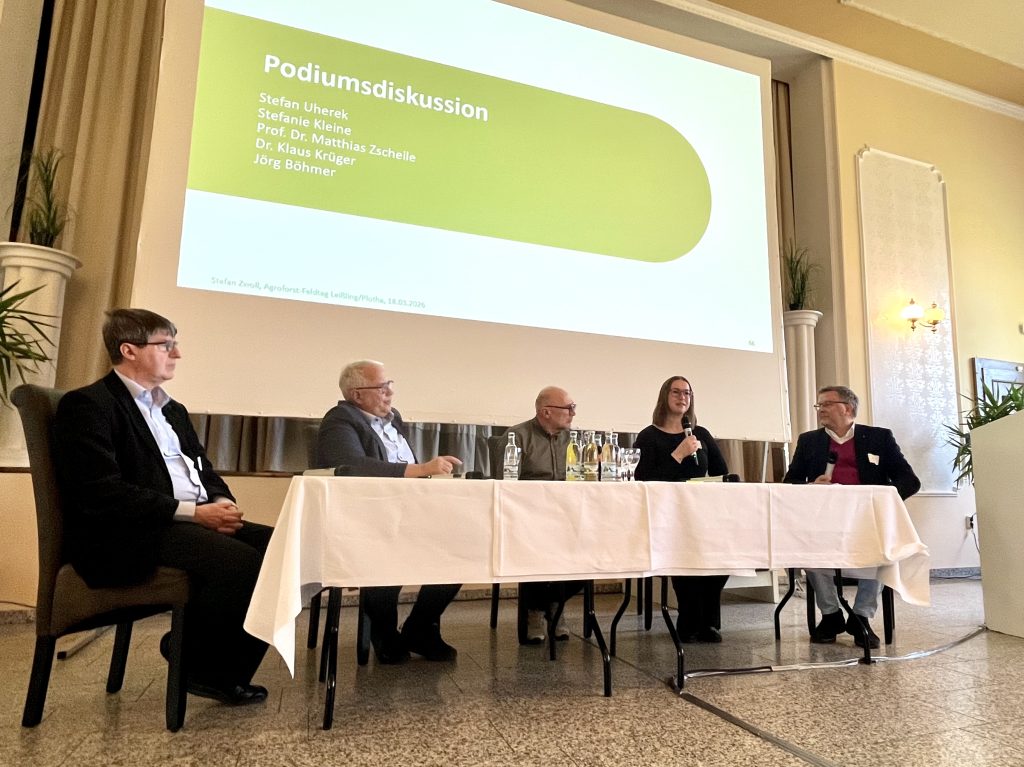
The keynote session was followed by a panel discussion on the topic ‘What to do with the wood?’. Moderator Stefan Zwoll from the German Agricultural Society (DLG) asked the participants about their motivation for engaging with the topic of agroforestry, as well as about economic prospects and factors for success:
- Farmer Stefan Uherek explained his motivation for getting involved in agroforestry. He made it clear that the farming sector must adapt to climate change and that, given the recent years of drought, simply carrying on as before is not a viable option for “preserving what we have built up here over generations”. He also spoke of heavy rainfall events that had repeatedly led to flooding in the village. At the same time, he noted that the farm is still looking for wood customers, partners and opportunities for the profitable utilisation of the timber.
- Stefanie Kleine, Managing Director of Wurzener Landwerke, explained the cooperative business model between the Landwerke, the participating local municipalities and regional agriculture. Together and through Saxony’s largest agroforestry system to date – planted in spring 2025 – it is possible to combine within a single area the provision of vital ecosystem services for the local population, energy for the village and value creation for agriculture. “Our citizens know that we are talking about regional value creation, stable prices, local services and independence. And that is well received – people are pleased when they drive past this field,” she summed up.
- In this context, Prof. Dr Matthias Zscheile from Rosenheim University of Applied Sciences pointed out that there is a significant shortfall in the supply of wood in Germany and Europe, and that this gap is continuing to grow. Despite his professional background in the material use of wood, he emphasised that he did not wish to spark a debate about competition between material and energy use of wood. Rather, the point is that the ‘lower-quality’ wood ends up in energy production, whilst the higher-quality wood is used for material applications. He saw logistics as a challenge for agroforestry systems and large-scale utilisation, but also recognised many new opportunities for utilisation.
- Dr Klaus Krüger from the Society for the Promotion of Medical, Bio- and Environmental Technology (GMBU) in Halle agreed. He noted that poplar, like other trees, contains numerous valuable substances – including, alongside cellulose and lignin, substances of pharmaceutical interest for which new utilisation concepts are currently being developed. If the aim is to “move away from petroleum-based raw materials towards renewable raw materials”, the focus should also be on utilising the wood and its diverse components as fully as possible. For start-ups with specialised products, even small quantities of wood can sometimes be of interest.
- One participant raised the question of whether material use should take precedence over the use of wood for energy. Jörg Böhmer from IfaS commented that energy and material use are not mutually exclusive, and that agroforestry systems using fast-growing tree species allow for a high degree of flexibility in their application.
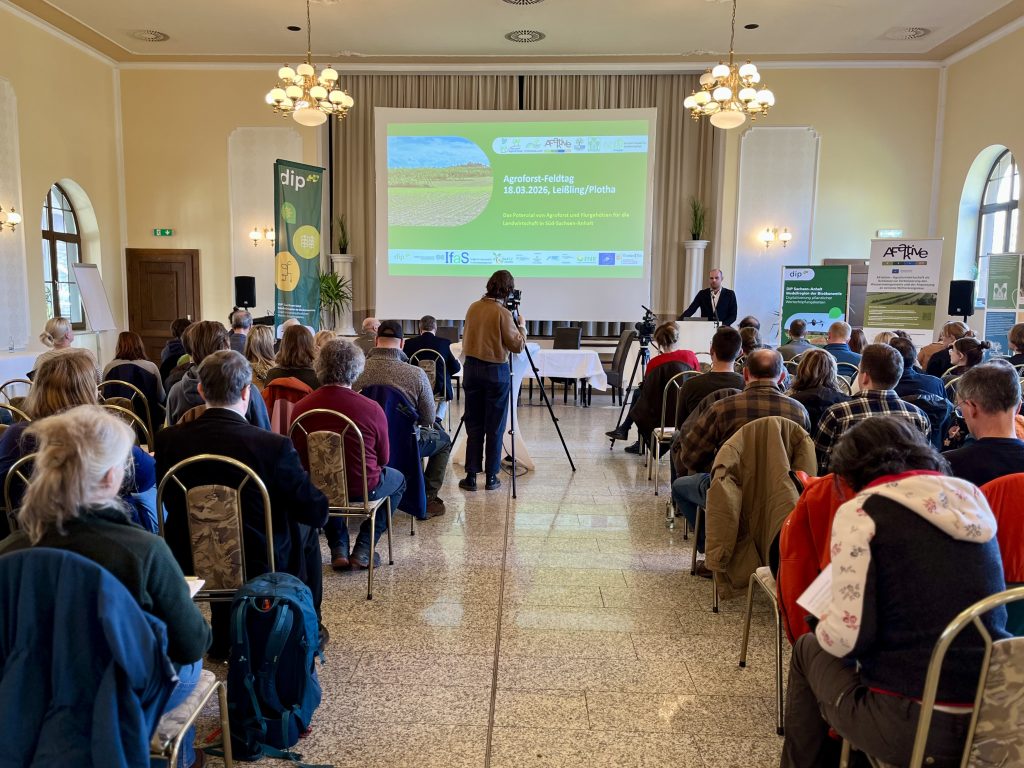
The discussion, including all the details, was recorded by the team from ACKER filmproduktion and will soon be made available on the websites of the participating projects.
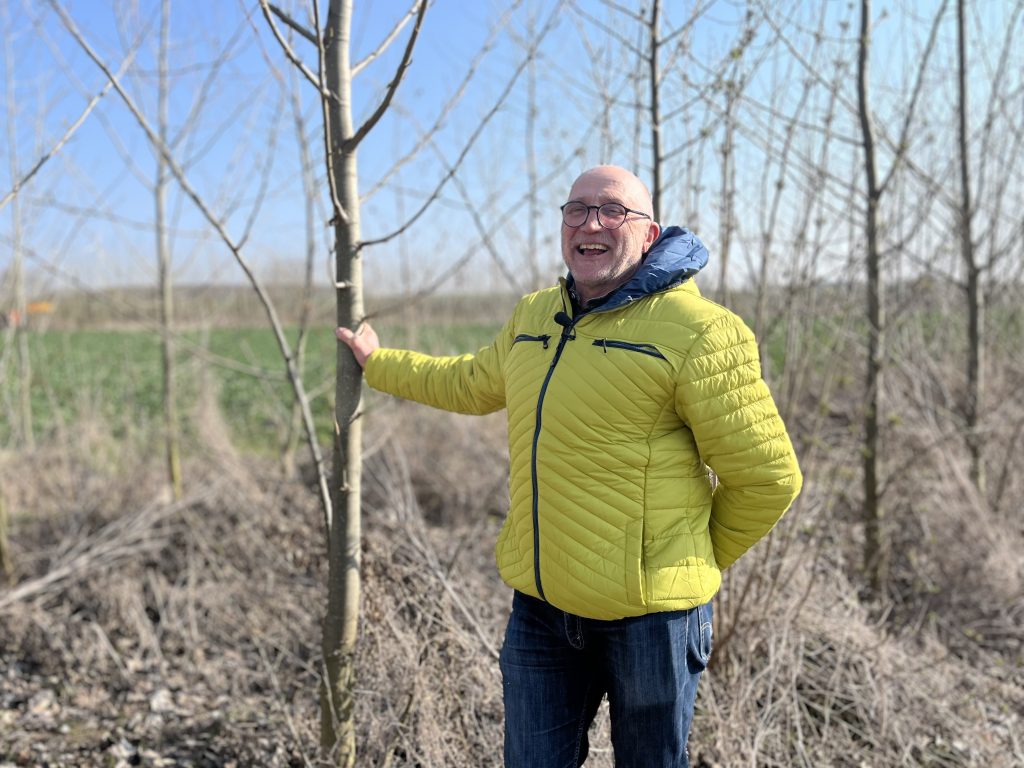
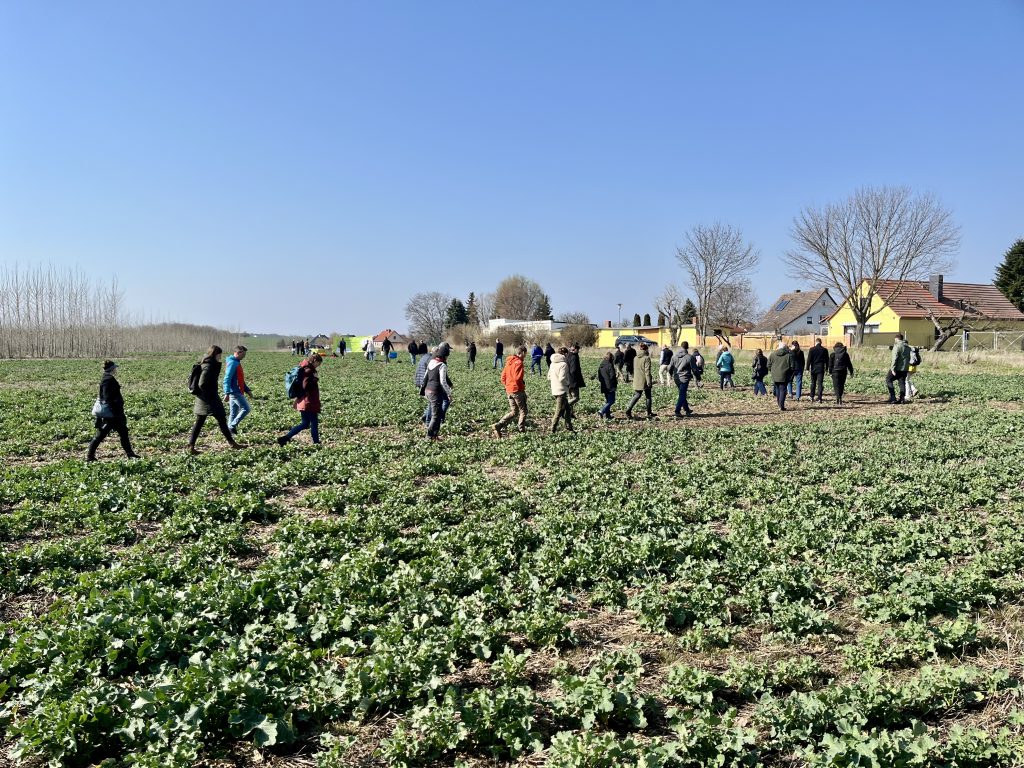
After lunch, in ideal weather conditions, the group set off for a field visit to the local farm, Uherek. Stefan Uherek, who runs the farm together with his son Florian Uherek, began by providing some basic information about the site. At a total of six stations in the field, a wide range of information was then presented, including on planting techniques, water retention and soil fertility in agroforestry.
The participating research and development projects offer the South Saxony-Anhalt region excellent opportunities to utilise agroforestry for greater climate adaptation, raw material supply security, regional value creation and the bioeconomy:
• The Uherek farm is a key pioneer in the region and has, since 2021, gained valuable experience for the wider adoption of agroforestry systems.
• Earlier in the morning, Stefanie Kleine invited attendees to find out more about the joint activities of Wurzener Landwerke and the Böhlitz Agricultural Cooperative at one of the upcoming events. More Böhlitz field days are being planned. Stay tuned via the website or social media (AFaktive /LUCA at IfaS).
• Interested stakeholders from the agricultural sector, the energy industry, local authorities and municipalities, as well as industry, are warmly invited to share their needs, ideas and initiatives for such a development with the teams of the participating projects, in order to promote the topic in a practical way.
Jörg Böhmer
Phone: +49 (0) 6782 17 – 2626
Mail: j.boehmer@umwelt-campus.de
Jan Lukas Wenzel
Phone: +49 345/55-26038
Mail: jan.wenzel@geo.uni-halle.de
By the end of the day, most participants agreed: agroforestry systems offer great potential for agriculture, society and the bioeconomy. And there is still much to be done to fully harness this potential.