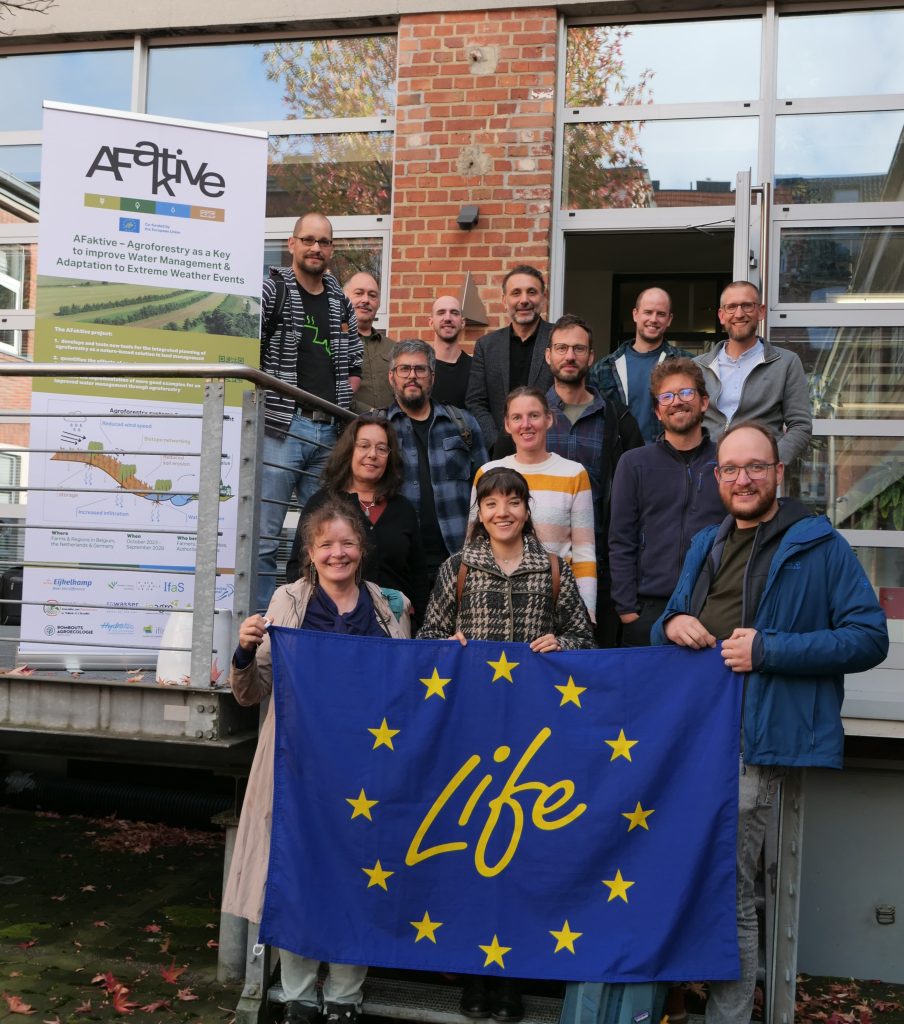
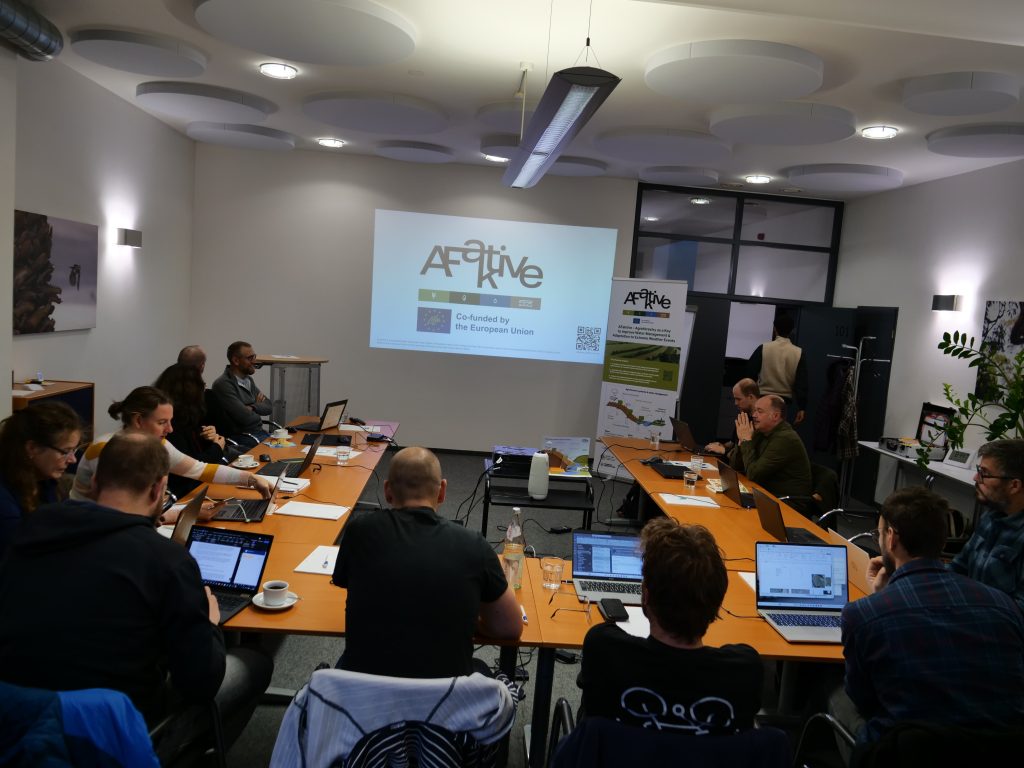
Mid-October, the AFaktive partner consortium met in Aachen. The discussions focused on maximising the project implementation and results in the final two years of the project, especially concerning new agroforestry farms, the use of the collected monitoring data and the runoff simulation tool.
© IfaS
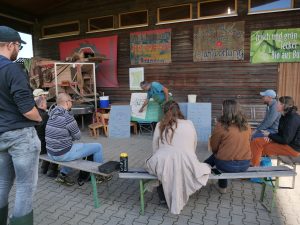
From 12th-14th October, the AFaktive consortium gathered for their annual partner meeting in Aachen. The choice of venue could not have been more apt. Not only does the city lie at the heart of the three project countries and implementation regions (Germany, Belgium, the Netherlands), but the hosting partner, engineering office Hydrotec, also presented the adaptation of its patented simulation tool, HydroAS, for agroforestry. A particular highlight was the interface for non-experts that is currently being developed.
Hydro AS simulates surface water runoff from precipitation. The integration of the agroforestry component into this software is one of AFaktive´s main outputs. However, it still requires an expert to operate and run simulations. The interface for non-experts allows e.g. municipal planners and farm consultants to access a simplified version of the software and model measures such as ditches and tree rows on a specific field.
The data underpinning the integration of agroforestry into HydroAS comes from the monitoring of the project sites using telemetry and manual measurements. This was another important focus of the discussion. The monitoring setup is complete and data is being collected. The AFaktive partners discussed how to process and store this data to ensure maximum added value for different target groups, from farmers and practitioners to researchers.
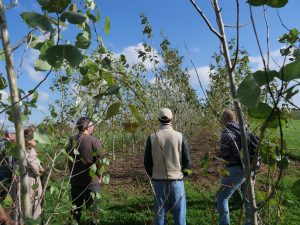
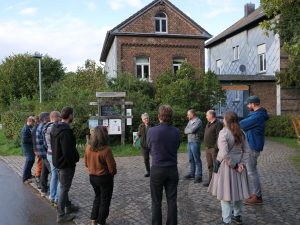
The indoor discussions were quite intensive, however – true to AFaktive´s practice-oriented approach – the consortium also visited two farms implementing agroforestry, Lammertzhof in Kaarst and Gut Hasselholz just outside Aachen. At Lammertzhof, two poplar agroforestry systems have been implemented. “These agroforestry rows are good for the landscape and for my heart” declared farmer Heinrich Hannen as he showed the AFaktive team around his farm.
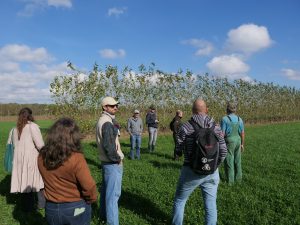
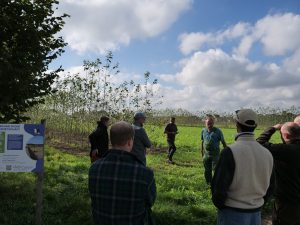
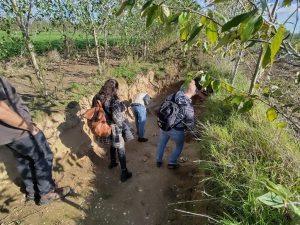
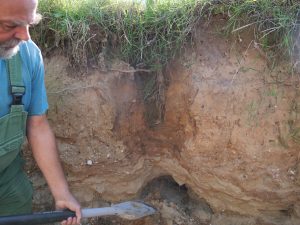
It was particularly interesting to examine the soil profile within one of the poplar rows, where a trench had been dug to reveal the underground root system.
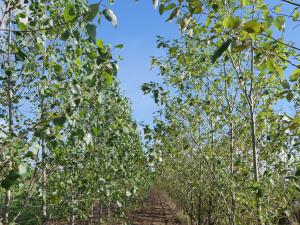
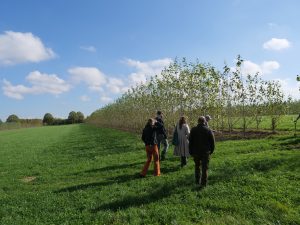
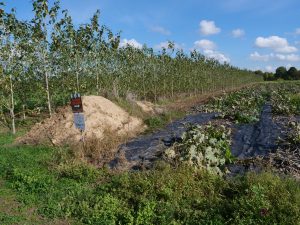
While the Lammertzhof farm has an alley cropping system with poplar, different vegetables, wheat and clover, the Gut Hasselholz farm features a silvopasture system with a variety of trees and shrubs. The senior farmer, Dietmar Veith, enthusiastically showed the AFaktive team his chestnut trees. “They are good for the bees, produce nutritious fruits and a very durable, versatile timber” At Gut Hasselholz the woody features line the fields margins and point the meadows where cows and horses graze contentedly. In fact, in this extensive husbandry system, the animals are free to roam the meadows and browse the low branches of the trees.
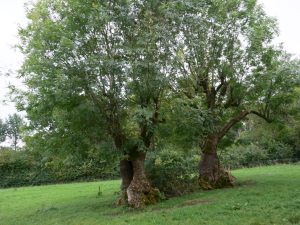
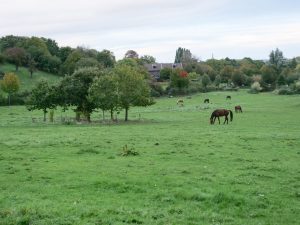
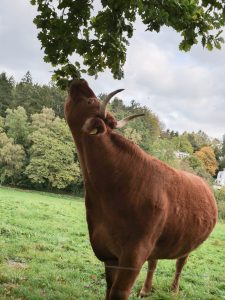
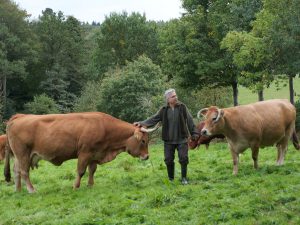
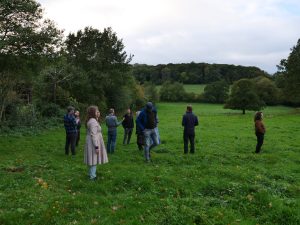
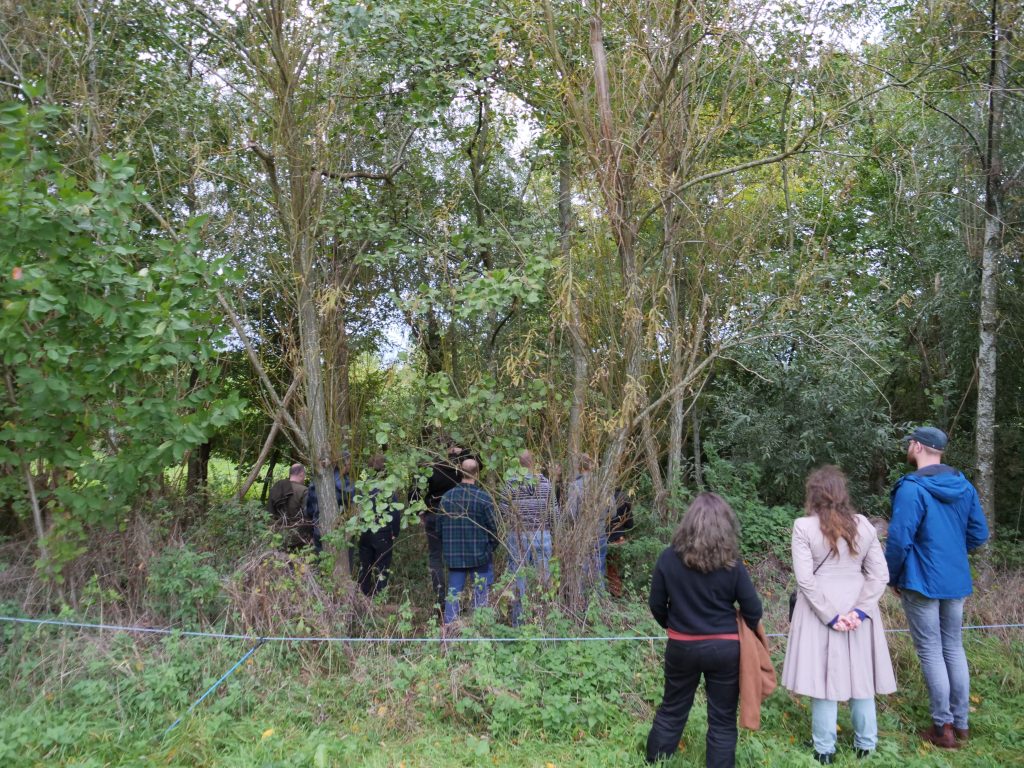
One striking landscape feature at Gut Hasselholz connects trees and water balance in a particularly vivid way. In the middle of one of the sloping meadows lies an area affected by gully erosion, where the ground is unstable due to cavities beneath the surface. When Dietmar Veith took over the field many years ago, this posed a potential risk also to his animals. Therefore, he secured the area and planted many trees (s. picture below). Some he had to replant because of the wet soil condition. After 14 years, a thicket has formed stabilising the ground in that meadow, and the farmer has a wealth of knowledge about selecting tree species suitable for the site.
Both farmers, Heinrich Hannen and Dietmar Veith, noted a decline in consumers interest in organic food and regenerative agriculture. Yet the benefits of these farming systems are clear – and extend beyond water management. This and the passion of the two farmers motivated the AFaktive partners to continue researching the effect of agroforestry systems, but also to scale up their implementation. Stay tuned to follow the progress of the AFaktive project!